Private Offices in Riyadh: When Your Business Outgrows Coworking
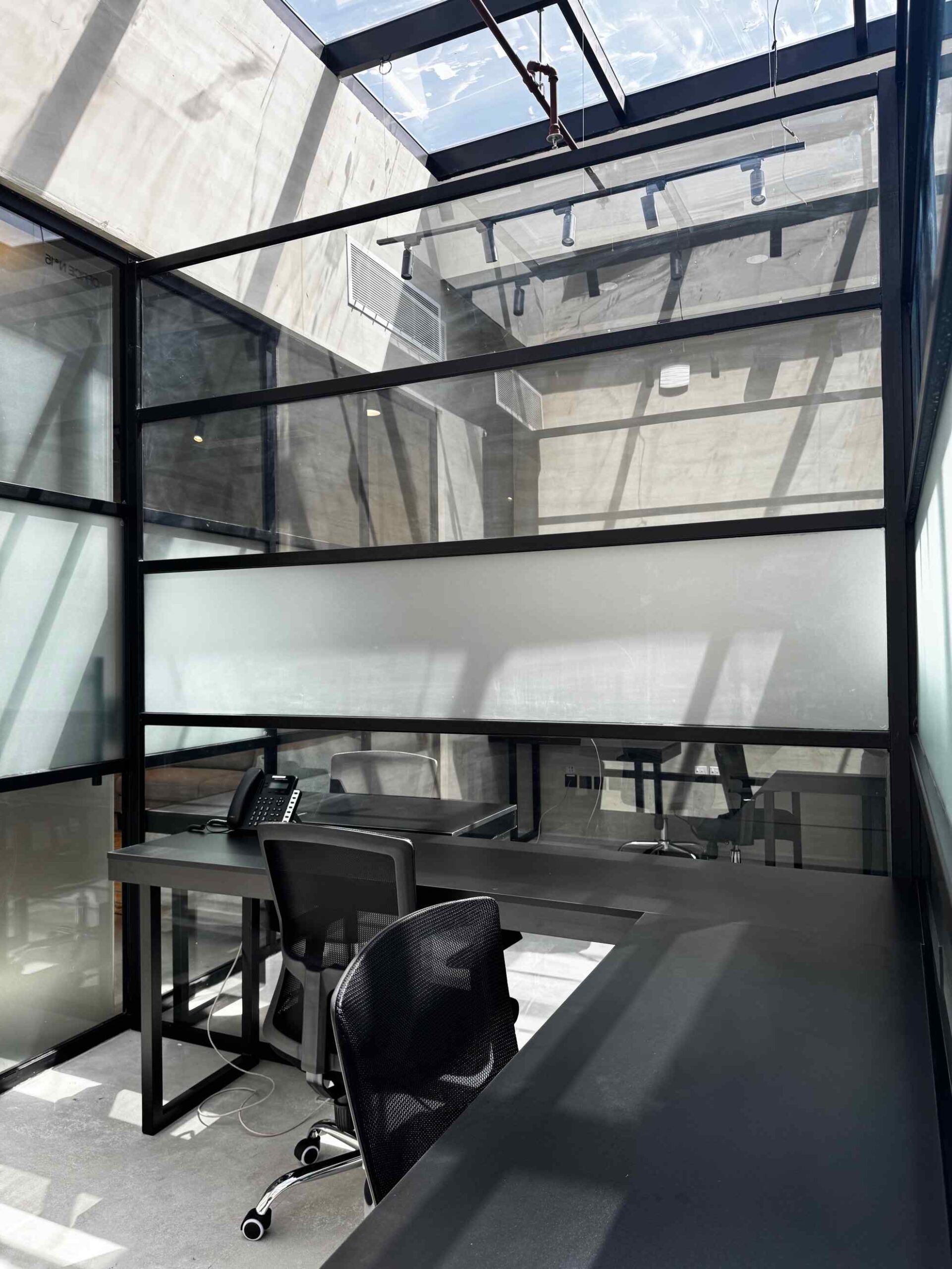
Outgrowing coworking is not a rejection of community. It’s usually a sign that your business has matured into a more structured, client-facing, operationally demanding version of itself. You still value energy and access. You just need more control, more consistency, and more privacy than open-plan seating can reliably provide.
Is it time for your own private office?
Your team has grown, your calls have increased, and your work needs more focus. See which private offices at R House fit your team size, workflow, and growth plans.
View available private offices9 clear signs your business has outgrown coworking
Growth doesn’t announce itself with a single big moment. It shows up as recurring patterns: the same interruptions, the same bottlenecks, the same “we’ll figure it out later” workarounds that slowly become part of your routine.
Use the nine scenarios below as a mirror. If you recognize your week in several of them, you are likely past the stage where coworking is the best-fit default.
| Sign | What it looks like in daily work | Why coworking stops working |
|---|---|---|
| Confidential work is now constant | HR conversations, pricing, contracts and client data can no longer be discussed openly | Open spaces force sensitive conversations into whispers, delays or avoidance |
| Focus time is disappearing | Simple tasks take twice as long because of interruptions and noise | Shared environments make deep work unpredictable and fragmented |
| Calls and meetings dominate the day | People constantly move around to find quiet spaces for calls | No reliable base for communication-heavy work |
| Brand perception now matters | Clients and candidates expect a professional, stable environment | Open desks do not signal maturity or long-term commitment |
| Equipment and materials are growing | Devices, samples and documents have nowhere permanent to live | Shared spaces are designed for mobility, not storage |
| Onboarding takes too long | New hires struggle to learn in noisy, exposed environments | Training and mentoring need privacy and stability |
| Work hours are no longer standard | Early, late and international calls are common | Office-hour access limits how modern teams operate |
| Logistics are stealing time | Finding rooms, seats and guest access becomes a daily task | The environment adds admin instead of removing it |
| Team energy is dropping | Fatigue, irritation and disengagement start to appear | Unpredictable environments quietly drain morale and focus |
Private office vs coworking: what actually changes (control, clarity, and performance)
If you try to decide between coworking and a private office based on vibe alone, the decision gets fuzzy. Both can be modern. Both can be well-designed. Both can put you around ambitious people.
The real difference is control.
A private office is not just a quieter room inside a coworking space. It is a different operating model for how your team works: how you protect focus, how you run meetings, how you handle confidential conversations, how you present yourself to clients, and how many small decisions you remove from the week.
Think of it as a decision lens. Ask one question: does your business perform better when the environment adapts to you, or when you adapt to the environment?
Insight: Why private offices accelerate hiring
Teams that operate from private offices tend to hire faster and retain talent longer than those relying on hot desks or open coworking. The reason is not luxury but clarity. A private office creates a sense of stability and belonging that candidates feel during interviews and onboarding. When people know where they will sit, how the team works, and what their daily environment looks like, they commit more easily. This matters in Riyadh’s competitive talent market, where high performers often choose employers who demonstrate long-term intent through professional, well-structured workspaces rather than temporary setups.
Focus and deep work become a default, not a daily battle
In an open-plan coworking environment, focus is something you defend. You use headphones. You move around. You search for the quietest corner. You try to time deep work when the space is calmer. It can work, but it takes discipline and effort. And when a team grows, the cost of that effort multiplies.
A private office changes behavior because the door creates a boundary.
It does three practical things immediately:
- It reduces interruptions by design, not by negotiation
- It clarifies norms, because “inside the office” becomes a shared expectation of how to act
- It protects momentum, because your setup, your screens, your tools, and your workflow remain stable
The result is not just less noise. The result is fewer resets.
When your team works in the same enclosed space, deep work becomes easier to schedule and protect. Team members can settle into longer blocks without constantly managing the environment. And because your office is a predictable base, people stop spending mental energy on “where can I do this” and start spending it on “how do I do this well.”
This is the often-missed advantage: a door doesn’t only block sound. It blocks randomness. And randomness is one of the biggest enemies of high-quality output.

Stronger collaboration for teams that build together
It sounds counterintuitive, but many teams collaborate more effectively when they have a private office than when they sit in open-plan coworking.
The reason is friction.
In coworking, collaboration can be socially awkward: you don’t want to disturb others, you don’t want to be the loud team, you don’t want to turn a shared environment into your internal war room. So collaboration becomes fragmented. It happens in whispers, in quick messages, in corridor conversations, or not at all.
A private office removes those constraints.
Inside a dedicated space, collaboration becomes normal again:
- Quick clarifications don’t feel like disruptions
- Pair work and mentoring can happen naturally
- Brainstorming is easier because the team is not self-editing in public
- Decisions happen faster because key people are physically together
This matters most for teams that “build” work rather than simply “process” it.
If your work involves creating deliverables, reviewing work together, iterating quickly, or managing multiple stakeholders, internal alignment is a performance lever. A private office makes that alignment less expensive. It reduces the friction of coordinating people, tools, and attention.
There is also a psychological shift: a private office creates a shared home base. That subtle sense of ownership improves routine, accountability, and team identity. People don’t just rent a desk. They operate from a space that feels like theirs, even within a flexible environment.
Client-ready professionalism without a traditional lease burden
Traditional office leasing often forces businesses into a high-friction commitment: long contracts, fit-out costs, maintenance responsibilities, and a timeline that rarely matches the speed of a growing company.
That’s why private offices inside a premium coworking environment are better understood as infrastructure.
You are not only paying for square meters. You are paying for a professional system that supports your business: location, facilities, meeting rooms, reception, internet, utilities, and the operational layer that makes the workplace feel stable and client-ready.
This approach can be especially powerful in Riyadh, where many teams want:
- A central, accessible base that works for clients and hiring
- A premium look and feel without the complexity of building it alone
- Flexibility to scale or adjust as the team grows
A private office gives you a place that supports higher-stakes work. But a managed private office also keeps the overhead manageable. You can focus on execution instead of being pulled into the never-ending work of running an office as a separate project.
In other words, it’s not “coworking versus leasing” as two extremes. It’s a middle path that keeps what was helpful about coworking while adding what growth demands: privacy, consistency, and control.
Operational consistency (IT, mail, printing, meeting rooms, reception)
Most leadership teams underestimate how much time disappears into micro-problems.
Not big strategic issues. Small operational questions that repeat constantly:
Where do we take this call?
Who can receive a package?
Is the Wi-Fi stable enough for a client presentation?
Can we print this contract quickly?
Where do guests check in?
Can we book a room that fits the group and has video conferencing?
A strong private office setup solves these problems before they become interruptions. The value is not dramatic in one moment, but compounding over weeks.
Operational consistency shows up as:
- Fewer daily decisions about space, meetings, and logistics
- Less time wasted coordinating access and resources
- A smoother experience for clients and guests
- A calmer internal rhythm, because the workspace behaves predictably
When the environment is reliable, teams build better habits. They plan with confidence. They show up sharper. And the operational load shifts away from founders and managers, where it does not belong.
A private office is not only about privacy. It’s about reducing the background noise of running your workday.
Get a private office built around your team
From compact offices for two people to large team studios, R House offers flexible private offices with 24/7 access, meeting rooms, and a professional business environment in central Riyadh.
Request a private office quote
What to look for in private offices in Riyadh (a practical buyer’s checklist)
Choosing among private offices in Riyadh is easier when you stop thinking in terms of “nice space” and start evaluating whether the workspace supports your real operating rhythm.
A private office can look great and still fail you if it creates new friction: inconvenient location, limited access hours, weak meeting-room availability, unclear policies, or operational gaps that show up at the worst times.
Use the checklist below as a practical evaluation tool. It is designed to protect you from choosing a space that feels right on day one but becomes limiting by month two.
Location convenience for your team and clients
Location is not a branding detail. It is a weekly productivity factor.
A strong location reduces lateness, improves attendance, makes client visits smoother, and supports hiring because commuting matters more than teams admit.
When evaluating location, look beyond the map pin. Ask what the location does for your routine:
- Is it central enough that clients can reach you without friction?
- Does it have parking options, not just “street parking if you’re lucky”?
- Are there nearby dining options for quick working lunches or client meetings?
- Is it positioned so that visiting partners or traveling team members can arrive efficiently?
At R House, the positioning is designed around these real needs: central Riyadh, parking availability, nearby dining, and Riyadh Airport under 30 minutes by car, which matters when your business involves travel, visiting stakeholders, or regional operations.
Access model that matches your real working hours
Many teams choose a workspace based on an ideal schedule, not their actual schedule.
If your work has time-zone calls, peak delivery cycles, or founder-level flexibility, limited access hours become a silent constraint. You might not feel it in the first week. You will feel it when deadlines hit.
When comparing private offices, be clear about your reality:
- Do you need early mornings or late nights regularly?
- Do you have deadlines where the team must work outside standard hours?
- Do you want flexibility as a culture, not an exception?
This is the difference between 24/7 access and office-hours access.
At R House, Resident members have 24/7 access. That is not a luxury for many teams. It is a practical feature that supports how modern businesses operate, especially when growth adds complexity.
Meeting rooms that scale with your needs
Private office teams still need meeting rooms. In fact, as teams grow, they often need them more frequently: client presentations, group interviews, planning sessions, workshops, and hybrid calls that require proper tech.
A private office provider should offer meeting rooms that scale in two ways:
Capacity scaling
You need different room sizes for different moments, not one room that forces every meeting into the same format. R House provides private meeting rooms that can seat from six up to 20 people, plus additional bookable spaces.
Technology scaling
“Video conferencing” should not mean a laptop balanced on a table. It should mean a room designed for real communication: stable connectivity, conferencing equipment that works without troubleshooting, and support that allows meetings to start on time.
When you evaluate meeting rooms, ask practical questions:
- How quickly can we book rooms, and how visible is availability?
- Can we book last-minute when a client requests a call?
- Are rooms set up for both in-person and hybrid meetings?
- Is there tech support and a predictable experience every time?
R House also includes different room styles for different needs, including more formal settings and larger spaces for workshops, which matters as your meeting formats diversify.
Community and networking as a business advantage (not a distraction)
Coworking community can be an asset, but only if it is optional and high-quality.
Growing teams usually want a balance: quiet, controlled execution most days, and community access when it adds value. The best environments make networking available without making the workday feel like a social event.
Look for signs of intentional community design:
- Events that are curated, not random
- Opportunities for talks, learning, and real networking
- A culture that respects focus and privacy
At R House, members have access to in-house events, including talks and networking sessions, plus monthly happy hours. The key point is that community is there when you want it, without forcing noise into your core work routine.
Insight: The hidden cost of open-plan coworking for scaling teams
Open coworking spaces are optimized for access and flexibility, not for operational efficiency. As teams grow, the cost of interruptions, noise, and constant room-hunting quietly compounds into lost hours each week. Private offices reverse this dynamic by turning the workspace into a predictable operating system instead of a variable. In practice, this often leads to fewer meeting delays, faster decisions, and noticeably higher output per person, even when the monthly desk cost is higher than shared seating.
Transparent policies (guests, printing, deposits, notice periods)
Policies sound boring until they affect your week.
This is one of the most practical steps you can take before choosing a private office: read the rules early. Policies shape how you host clients, how you manage admin, how you handle growth, and what happens if your needs change.
The policies worth checking upfront include:
Guest policy
How long can guests stay? Do they need to sign in? Are there limits? Can you host informal meetings easily?
Printing and admin support
Are there included printing allocations? What happens when you exceed them? Is printing straightforward?
Deposits and billing structure
What deposit is required? When is it returned? Are there hidden fees?
Notice periods and flexibility
If your business scales up or shifts, how much notice do you need to change or cancel? Is the minimum commitment clear?
The right provider makes these details transparent and predictable. That predictability is not a minor benefit. It protects you from unpleasant surprises and helps your team operate smoothly.
R House private offices in Riyadh are designed for teams that need focus, privacy, and a professional base without the complexity of a traditional lease. Each office gives you 24/7 access, secure high-speed internet, and full use of shared spaces, meeting rooms, studios, and event areas, allowing your team to work, meet, and grow from one consistent location. Positioned in central Riyadh with parking, nearby dining, and fast access to the airport, R House combines the stability of a private office with the flexibility and community of a modern coworking environment.
Move your team into a space that supports real growth
Schedule a tour of R House and explore private offices designed for focused work, client meetings, and scaling teams in Riyadh’s most dynamic business environment.
Schedule a private office tour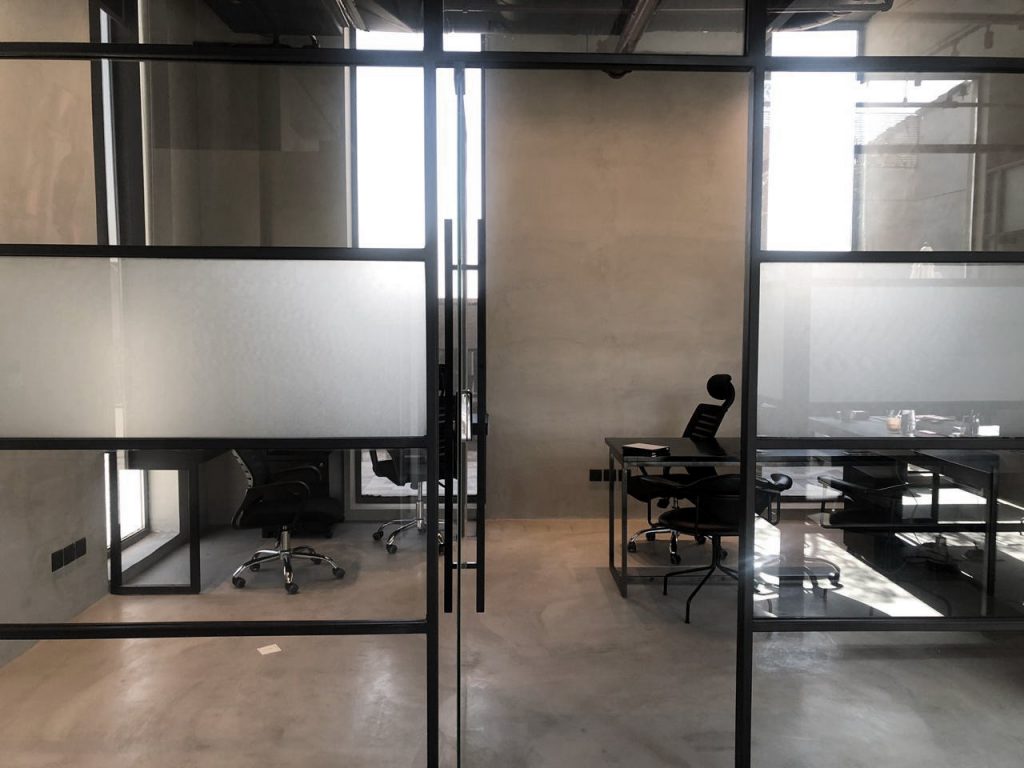
FAQ – Private offices in Riyadh
When should a business move from coworking to a private office?
Most teams should consider a private office when they start handling confidential client work, hiring regularly, running frequent meetings, or losing productivity due to noise, lack of space, and scheduling friction in open coworking areas.
Do private offices at R House include 24/7 access?
Yes. All private offices come with Resident membership, which includes full 24/7 access to your office, shared spaces, meeting rooms, studios, and all R House facilities.
How do meeting room hours work?
Resident members receive a monthly allocation of meeting room hours included in their membership. Collaborator members also receive included hours, while Nomad and Transient members can purchase hours via the R House app or website. Extra hours are simply added to the next invoice.
What is the guest policy at R House?
Members may invite guests for informal meetings for up to two hours during their access hours. Guests attending pre-booked meetings may stay for the full duration of the booking. All guests must sign in at reception and be accompanied by the member. Bringing more than one guest requires front-of-house approval and guest passes.
Can I receive business mail and packages at R House?
Yes. All members can use R House as their business address. You will be notified when mail or packages arrive, and they will be securely stored for up to 30 days.
Do you offer day passes for non-members?
No. R House does not offer day passes. If you would like to work from R House, you can apply to schedule a tour and choose a suitable membership or private office.
Is a deposit required to rent a private office?
Yes. A one-month deposit is required when you join. It is held in case of missed payments or incidentals and is returned within 45 days after cancellation.
Can I change my membership if my team grows?
Yes. Memberships can be changed with notice. Nomad and Transient members require 30 days’ notice, Collaborator members 60 days, and Resident members 90 days.
Is parking available for members and clients?
Yes. R House offers both daily and monthly parking. Members can speak to the front-of-house team or contact management at management@rhouse.co for details.
What amenities are included with a private office?
Private office members receive 24/7 access, secure high-speed Wi-Fi, meeting rooms, studios, event spaces, reception services, kitchen and coffee, printing, phone booths, terrace, courtyard, parking options, and access to all R House events and the member directory.