How Smart Companies Use Their Office as a Competitive Advantage
Smart companies treat the office as infrastructure for outcomes. The workspace becomes a system that shapes how people think, communicate, make decisions, and deliver. When the office is chosen and designed with intention, it stops being overhead and starts functioning like a competitive tool. It improves execution speed, it raises the quality of client interactions, it strengthens culture, and it creates conditions where good people want to stay and do their best work.
Turn Your Office Into a Competitive Advantage
If you are serious about improving focus, elevating client experience, and strengthening your brand presence, it is time to rethink your workspace. Discover a business office space in Riyadh designed to support performance, credibility, and long-term growth.
Schedule a Tour at R HouseWhat “competitive advantage” looks like inside a modern office
Competitive advantage can sound abstract, like something reserved for strategy decks. In practice, it often comes down to consistent operational edges: faster decisions, clearer communication, fewer delays, and a stronger ability to attract and keep high-quality people.
| Competitive factor | Workspace feature | Business impact |
|---|---|---|
| Faster execution | Quiet zones, predictable routines, reliable high-speed internet, bookable private rooms | Shorter project cycles, fewer interruptions, reduced rework, stronger delivery consistency |
| Deep focus and quality output | Dedicated work areas with minimal noise and structured layouts that reduce cognitive friction | Higher-quality work, fewer mistakes, improved concentration, measurable productivity gains |
| Stronger company culture | Shared collaboration areas and natural interaction points that encourage informal communication | Earlier problem-solving, stronger cross-team alignment, improved retention and morale |
| Client confidence and credibility | Professional reception, formal meeting rooms with conferencing technology, organized guest handling | Stronger first impressions, smoother negotiations, higher trust, increased pricing power |
| Creative capacity and innovation | Studios, workshop spaces, flexible project rooms, and environments that support different work modes | Faster idea development, better collaboration, stronger product and service innovation |
| Operational stability | Secure connectivity, structured booking systems, mail handling, clear policies and standards | Reduced daily friction, predictable workflows, stronger team confidence and reliability |
| Talent attraction and retention | Modern, professional environment in a central business office space Riyadh with access to amenities | Improved employer brand, higher-quality applicants, longer employee tenure |
| Community-driven opportunity | Events, seminars, workshops, and member directory for structured networking | Partnership opportunities, knowledge exchange, increased business visibility |
Why flexible workspaces outperform traditional leases for modern teams
Traditional leases were built for a different era: stable headcount, predictable routines, and long planning cycles. Many modern companies are more dynamic. Teams change, projects shift, and work modes evolve. In that environment, flexibility becomes a strategic advantage.
Flexible workspaces can outperform traditional leases because they reduce risk, increase agility, and often improve the employee and client experience at the same time.
Agility: scale up or down without breaking the business
Growth rarely happens in perfect lines. Companies expand, contract, reorganize, and sometimes pivot. A fixed lease locks the business into assumptions that may be outdated in six months.
Flexible workspace models support agility by allowing companies to match space to reality, not to forecasts.
Teams evolve; fixed leases punish change
With a traditional lease, change becomes expensive:
- You pay for unused space when headcount drops
- You face disruption when you need more space quickly
- You invest in fit-out and furniture that may not match future needs
These costs are not only financial. They create distraction and operational drag.
Membership structures as strategic flexibility
Membership-based access creates a different relationship with space. Instead of “owning” a fixed footprint, companies choose a level of access that fits their current stage and operational rhythm.
That can mean:
- Private space for teams that require stable, focused environments
- Flexible access for individuals who do not need dedicated desks
- The ability to use meeting rooms, workshops, and project spaces as needed
The key advantage is not convenience. It is responsiveness. Smart companies protect their ability to adapt without destabilizing operations.

Cost clarity: predictable monthly spend vs hidden operational drain
Many businesses underestimate the real cost of running a traditional office. Rent is only the beginning. The hidden operational drain often includes technology, maintenance, printing, reception, utilities, booking systems, and the management time needed to coordinate all of it.
Flexible workspaces often bundle many of these elements, turning unpredictable operational complexity into clearer monthly planning.
Insight: The 90-Minute Performance Rule
High-performing teams often operate in focused 60–90 minute blocks of deep work. The quality of the physical environment during those windows directly affects output. When a business office space Riyadh provides quiet zones, reliable connectivity, and easy access to bookable rooms, those focused intervals become more productive and less interrupted. Over weeks, this compounds into faster project completion, fewer revisions, and stronger client delivery. Workspace design does not just influence comfort; it shapes how effectively teams use their most valuable resource: attention.
Bundled essentials vs fragmented office management
When core needs are included as part of the workspace experience, companies avoid the “death by a thousand tasks” effect. Instead of repeatedly solving the same operational problems, the team can focus on delivery.
Common bundled elements that reduce operational drag include:
- Secure Wi-Fi and printing
- Reception and visitor handling
- Bookable meeting rooms with conferencing support
- Shared kitchen and refreshments
- Managed facilities and daily upkeep
How cost transparency improves decision-making
Predictable costs improve decision-making because leaders can invest with confidence. Instead of worrying about surprise repairs, equipment upgrades, or administrative overhead, they can focus on growth priorities: hiring, marketing, product, and client delivery.
Talent advantage: the office as a hiring asset
Hiring is increasingly influenced by experience. Candidates evaluate not only compensation, but the environment where they will spend their working hours, the commute, the professionalism of the workplace, and whether the space supports focus and well-being.
Location and experience matter to candidates
People notice when an office is central, accessible, and close to amenities. They also notice whether the workspace feels modern and intentional. The office becomes part of the employer brand.
Flexible space signals modernity and care
A flexible, well-designed workspace sends a message: the company values performance and understands how people work today. That signal can make a difference when two employers offer similar roles.
In practice, a high-quality business office space Riyadh can become a recruitment tool, not because it is flashy, but because it supports a better daily experience and reflects professional standards.
What smart companies look for in a business office space in Riyadh
After location, the next advantage comes from the quality of the environment itself. Smart companies do not evaluate office space only by appearance. They evaluate it by performance. The question is not “Does it look nice?” The question is “Does it make the team work better and make the company easier to trust?”
A modern business office space Riyadh should deliver five categories of value: design that supports focus, variety of settings, tech readiness, community opportunity, and operational confidence.

Design that supports focus and flow
A high-performing office feels intentional. It has a logic. People can concentrate without feeling isolated, and they can collaborate without disrupting others. The design does not force constant negotiation about where to work, where to take calls, or where to hold discussions.
R House describes this as “intuitively designed, progressive, professional.” In practice, those words mean something specific.
What “intuitively designed” means in practice
Intuitive design reduces cognitive load. People should not have to figure out how to use the space every day. The layout should guide behavior naturally.
In a workplace built for focus and flow, you typically see:
- Clear separation between quiet work areas and social/collaboration areas
- Easy access to meeting rooms, phone booths, and shared amenities
- A layout that supports movement without creating noise and distraction
- Booking systems that reduce confusion and back-and-forth coordination
When design is intuitive, productivity increases without requiring stricter rules. The environment does the work.
“Progressive and professional” without feeling rigid
Many offices make a false choice: either they feel corporate and stiff, or they feel casual and disorganized. Smart companies look for a third option: professional standards with human comfort.
That balance matters because:
- Employees want a space where they can focus and still feel at ease
- Clients want a space that signals competence without feeling cold
- A modern brand needs an environment that matches how it actually works today
Professional does not mean formal for its own sake. It means consistent quality, reliability, and respect for time.
Variety of settings: work modes change throughout the day
Work is not one activity. A single day often includes deep work, calls, quick alignment, collaborative problem solving, and formal meetings. The best spaces support these shifts without forcing people to leave the building or compromise.
A modern workspace should offer multiple settings so teams can choose the right environment for the task.
Dedicated workspaces, shared desks, private offices, studios
Different roles and different stages of business require different levels of privacy and stability.
Smart companies look for options that align with how they operate:
- Dedicated workspaces for consistent routines and team stability
- Shared desks for flexibility and lighter in-office presence
- Private offices for confidentiality, focus, and predictable team coordination
- Studio-style project spaces for creative work, planning sessions, and production
When these options exist within one ecosystem, a company can evolve without constantly changing addresses or rebuilding its setup from scratch.
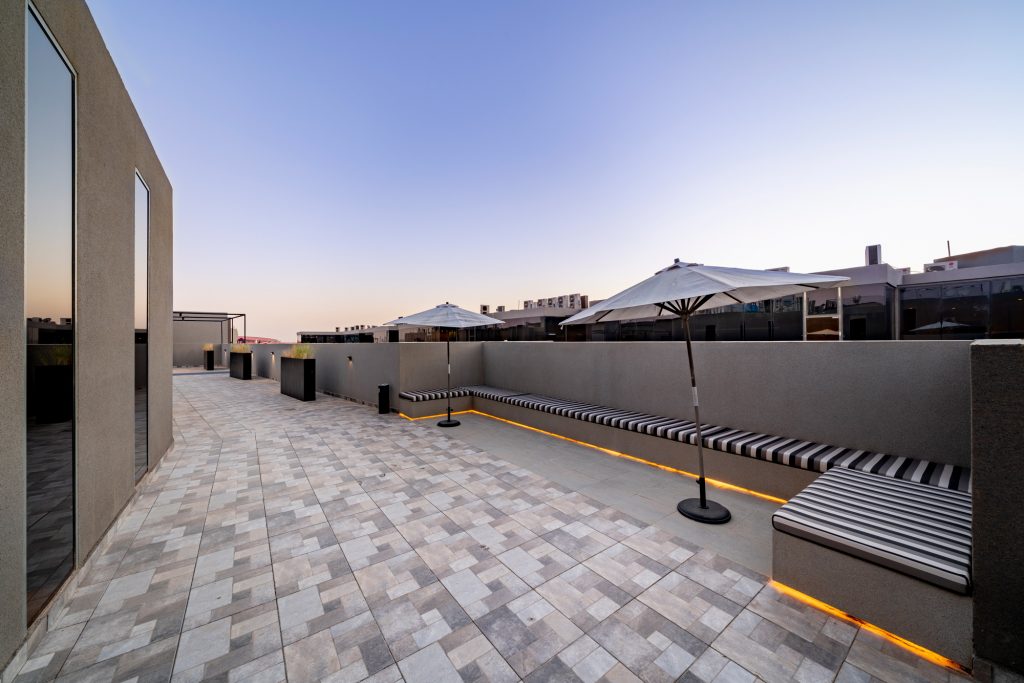
Outdoor options as productivity tools, not “nice extras”
Outdoor areas often get dismissed as lifestyle features. Smart companies evaluate them differently. When outdoor spaces are integrated into the workplace, they become performance tools.
A terrace and a central courtyard can support:
- Short breaks that reset attention and reduce fatigue
- Informal conversations that strengthen relationships
- Quick calls in a setting that feels less constrained
- A healthier rhythm that keeps people productive over long days
These spaces do not replace desks. They improve the quality of the workday by giving people alternative environments that match different mental states.
Tech readiness: seamless meetings and collaboration
Technology is part of how work happens, not an add-on. When the office cannot support modern collaboration reliably, the space becomes a bottleneck. Smart companies look for environments where meetings begin on time, video calls work, and booking is straightforward.
Upgrade the Way Your Team Works in Riyadh
From private offices with 24/7 access to flexible desks and fully equipped meeting rooms, choose a workspace that matches your competitive strategy. Build your company from a professional environment that supports speed, collaboration, and confidence.
Explore Membership OptionsVideo conferencing, tech support, and a member booking platform
A workplace that supports business performance typically includes:
- Meeting rooms equipped with essential conferencing technology
- Video conferencing support that reduces troubleshooting
- Tech support when issues arise
- A booking platform that makes it easy to see availability and reserve space
This matters because every minute spent dealing with technology is a minute not spent on decisions, delivery, or client value.
Private phone booths for calls and sensitive discussions
Privacy is often what breaks in open-plan environments. When there are no dedicated places for calls, people either avoid important conversations or they take them in unsuitable settings.
Private phone booths solve a real problem:
- They protect confidentiality
- They reduce noise in shared areas
- They allow more natural communication without disrupting others
- They support sales calls, interviews, and sensitive internal discussions
Smart companies treat privacy infrastructure as a requirement, not a luxury.
Community and programming that creates opportunity
A strong workspace does more than house teams. It connects them. When a workplace includes programming, events, and community tools, it creates a network effect. This is not about “socializing.” It is about opportunity.
Thought-provoking seminars, workshops, and events
Events and workshops can create direct business value by enabling:
- New collaborations between members
- Skill-building and professional development
- Exposure to new ideas and perspectives
- Stronger sense of momentum within the workplace community
For founders, consultants, and creative teams, this environment can create opportunities that would not appear in isolated offices.
Member directory and app as real relationship infrastructure
Community becomes valuable when it is organized. A member directory and app can help people:
- Discover who is in the space and what they do
- Connect intentionally, not randomly
- Stay informed about events and programming
- Access perks and benefits that improve the work experience
When relationship-building is supported by systems, the community becomes easier to activate and more likely to generate real business outcomes.
Insight: Perception Multiplies Pricing Power
Clients rarely evaluate expertise in isolation. They assess context. A professionally managed office with reception, structured meeting rooms, and seamless conferencing technology reinforces competence before the conversation even begins. Companies that host negotiations and presentations in polished environments often find it easier to justify premium pricing and longer-term contracts. The office becomes part of the value proposition, strengthening credibility and subtly influencing buying decisions.
Operational confidence: reception, security, and professional standards
Even the best design and technology can be undermined by poor operations. Smart companies evaluate whether the workspace feels managed well and whether professional standards are protected consistently.
Front-of-house reception and the client-ready experience
Reception is not only a welcome desk. It is a trust mechanism. It affects how visitors experience the brand and how smoothly daily operations run.
A front-of-house reception supports:
- Professional guest handling and sign-in expectations
- Clear processes for permissions and passes
- Help for members when practical issues arise
- A calmer experience for clients arriving for meetings
Mail and package handling as an operational advantage
Mail and packages can create friction when a company is not set up to receive them reliably. A workspace that supports mail receiving and secure storage reduces operational risk and makes daily logistics simpler, especially for small teams.
Guest sign-in rules that protect standards
Guest policies matter because they protect the environment. When rules are clear and consistently enforced, members can trust that the workplace will remain comfortable, secure, and professional.
Policies such as guest sign-in requirements and time limitations for informal visits are not restrictive when they are designed to maintain quality for everyone.
What an exclusive number of memberships signals
When a workspace maintains a limited and exclusive number of memberships, it typically signals quality control. The goal is to protect:
- Comfort, noise levels, and professional atmosphere
- Availability of shared amenities and bookable spaces
- Community fit and overall harmony
- Consistency of the experience over time
This approach aligns with how smart companies think: growth is valuable only when it does not degrade standards.
Host Clients With Confidence. Work With Focus.
Your office shapes how clients see you and how your team performs. Choose a centrally located business office space in Riyadh with professional meeting rooms, collaborative studios, and an environment built for serious growth.
Discover R House CoworkingFAQ – How Smart Companies Use Their Office as a Competitive Advantage
How can an office space become a competitive advantage instead of just an expense?
An office becomes a competitive advantage when it improves measurable outcomes such as productivity, hiring quality, client confidence, and execution speed. Instead of viewing space as overhead, smart companies choose environments that reduce friction, support focus, and enhance professionalism, directly influencing performance and growth.
Why does location matter so much for business performance in Riyadh?
Location impacts commute reliability, client accessibility, and overall brand perception. A centrally positioned business office space in Riyadh, especially one close to restaurants, hotels, and key transport routes, makes meetings easier to schedule and improves the daily rhythm of both teams and visiting stakeholders.
What features should companies prioritize when choosing a business office space in Riyadh?
Companies should prioritize intuitive design, reliable high-speed internet, professional meeting rooms with conferencing technology, private call areas, reception services, and flexible access options. The ability to book rooms easily and host clients in a polished setting is especially important for long-term credibility and operational efficiency.
How do meeting rooms contribute to closing deals and improving execution?
Professional, bookable meeting rooms reduce delays and protect confidentiality. When teams can schedule rooms quickly and rely on built-in video conferencing technology, meetings start on time and run smoothly. This improves client experience, accelerates decisions, and increases the likelihood of successful negotiations.
Is a flexible membership model better than a traditional office lease?
For many modern teams, flexible membership models offer strategic advantages. They allow companies to scale up or down as needed, avoid long-term lease commitments, and access bundled amenities such as reception, printing, Wi-Fi, and meeting rooms without managing each component separately.
How does office design influence employee retention and culture?
A thoughtfully designed workspace supports both focus and collaboration. Quiet areas enable deep work, while shared spaces and events foster connection. When employees feel the environment supports their productivity and well-being, retention improves and company culture becomes stronger and more cohesive.
What role does community play in a coworking environment?
Community adds value by creating networking opportunities, collaboration potential, and exposure to new ideas. Structured events, workshops, and member directories help professionals connect intentionally, which can lead to partnerships, referrals, and business growth.
How can a company evaluate if R House is the right business office space in Riyadh?
Companies should assess their required access hours, need for private versus shared space, frequency of client meetings, and interest in networking opportunities. If the environment supports focus, collaboration, and professional hosting needs, it can serve as a strategic base for growth rather than simply a workplace.