How Fast-Growing Companies Think About Their Office Space
When a company is scaling quickly, the office stops being a backdrop and starts acting like a lever. It can accelerate hiring or slow it down. It can strengthen culture or quietly fragment it. It can make cross-team execution smoother or turn every collaboration into a scheduling problem. And in markets where talent has options, the workplace experience can be the difference between attracting the right people and losing them to a competitor that feels easier to join, easier to work with, and easier to belong to.
Does Your Office Earn the Commute?
If your workplace is meant to drive alignment, speed and competitive advantage, it should outperform working from home. Discover how R House delivers focus, flexibility and community for teams seeking high-performance office rental in Riyadh.
Schedule a TourWhat changed and why it matters to leadership teams
The pandemic did not just change where people worked. It changed the expectations people carry into work. It also changed the relationship between office space and the surrounding city.
For leaders, this matters because office decisions are no longer isolated decision lines on a budget. They affect talent, operations, and brand. They also interact with forces outside your walls: commuting patterns, downtown vibrancy, and the attractiveness of urban cores.
The behavioral shift: remote adoption reshaped commuting, downtown activity, and office usage
Remote work adoption happened at scale, fast. In many knowledge-economy roles, people proved they could deliver outcomes without being physically present five days per week. That created a new baseline: employees now compare the office experience to the work-from-home alternative, every time they decide whether to commute.
This comparison has consequences:
- If commuting is long, expensive, or unpredictable, the office must provide a strong reason to justify the trip.
- If the office experience is generic, crowded, or poorly supported, people will default to the environment where they control focus and comfort.
- If in-person time is clearly designed around collaboration, learning, and relationship building, people can see the value and plan around it.
In other words, leaders can no longer assume that the office is automatically the best place to work. The office must prove it.
Insight: Office Space as a Performance Multiplier
The most effective high-growth companies no longer measure office success by occupancy rate or cost per square meter. They evaluate it by performance impact. Does the space accelerate onboarding? Does it shorten decision cycles? Does it increase cross-team coordination and idea exchange? When leaders reframe the workplace as a tool that compounds productivity, they shift budget from excess square footage to better design, better technology, and better programming. The result is not necessarily a larger office, but a smarter one that actively contributes to revenue growth and talent retention.
Demand is interconnected: office attendance influences retail footfall and urban life
Office demand does not exist in isolation. When fewer workers are present in urban cores, retail activity changes. The city feels different. Streetscapes feel less active. That can create a feedback loop: a less dynamic downtown becomes less appealing, which further discourages commuting and weakens the case for being in-office.
In many global cities, projected demand for office space is expected to be lower by 2030 than it was in 2019, particularly for traditional, standard-grade space that does not meet modern expectations. At the same time, demand patterns for retail and residential space do not move in lockstep; they can diverge depending on local conditions.
For leadership teams, the implication is practical: location decisions are no longer just about address prestige. They are about whether the surrounding environment supports the workplace experience you want employees to have. A strong office in a weak ecosystem can still struggle to earn attendance.

Why this creates pressure on both occupiers and landlords
A large share of existing office inventory was designed for a different era. The classic model optimized for dense rows of desks and predictable routines. It assumed that the office was the default place for individual work, that meetings were a smaller portion of the day, and that technology needs were basic.
Today, work is a blend:
- Focus work that may be better at home for many roles.
- Collaboration work that is dramatically better in person when designed well.
- Hybrid work that requires excellent technology and thoughtful space types.
- Culture-building and social capital formation that cannot be replicated through calendars alone.
This gap between legacy design and modern work patterns forces change. Landlords and operators need to create spaces that support outcomes and experience, not just provide square meters. Occupiers need to choose spaces that enable performance, not just house headcount.
Build a Workplace That Scales With You
High-growth companies need space that adapts to changing headcount, hybrid schedules and evolving project teams. Explore flexible private offices, meeting rooms and event spaces designed to support ambitious teams in Riyadh.
Explore Membership OptionsHow fast-growing companies define the job of the office
Fast-growing companies tend to be clear-eyed about one reality: if you do not define the job of the office, the office will quietly define your culture and your operating speed anyway.
| Leadership clarity area | Key strategic question | Practical examples and implications for space |
|---|---|---|
| Work mode definition | Which work is best done in person, and which work is best done asynchronously? | Deep focus tasks such as writing, analysis and planning may require quiet zones or private offices. High-stakes debates, cross-functional alignment and emotionally nuanced discussions benefit from dedicated in-person collaboration rooms with strong acoustics and privacy. |
| On-site performance outcomes | What must happen on-site for the business to win? | Faster onboarding, shorter ramp time, higher decision velocity and improved knowledge transfer require structured meeting spaces, training rooms and visible leadership presence areas that reinforce culture and standards. |
| Behavior design | Which behaviors should the workplace make easier and which should it reduce? | Encourage spontaneous problem-solving, mentorship and quick alignment through shared collaboration zones. Reduce constant noise and interruptions by providing phone booths, focus rooms and clear zoning between quiet and social areas. |
| Alignment and scaling risk | Where does misalignment create the highest cost of delay or misunderstanding? | Quarterly planning sessions, cross-team kickoffs and leadership rhythms require adaptable workshop-style environments that support real-time decision-making and visible documentation. |
| Customer and stakeholder experience | How should the office strengthen credibility and external trust? | Client workshops, investor meetings and candidate interviews benefit from professional boardrooms, reception services and well-designed presentation spaces that signal operational maturity and reliability. |
Why “earn the commute” is the most useful office strategy phrase today
“Earn the commute” is not a slogan. It is a standard.
It forces a leadership team to answer a practical question:
If an employee can do productive work without commuting, what outcomes will the office reliably deliver that make commuting worth it?
This standard is especially powerful for fast-growing companies because it ties office investment to measurable business results rather than presence for its own sake.
Translate “earn the commute” into measurable outcomes
A strong office strategy should move real metrics, not just sentiment. The most relevant outcomes tend to be these.
Faster onboarding and ramp time
A workplace that earns the commute helps new hires become effective faster by making it easier to:
- Build relationships quickly
- Observe how decisions are made
- Get informal coaching and context
- Resolve questions without friction
This shows up in shorter time-to-productivity and fewer onboarding failures.
Better cross-team coordination
As a company scales, coordination becomes the hidden cost of growth. A high-performing office reduces that cost by enabling:
- Faster decision cycles
- Clearer alignment between teams
- Higher-quality collaboration with less scheduling overhead
This shows up in fewer blocked projects, fewer duplicated efforts, and smoother handoffs.
Stronger retention and hiring conversion
Employees do not stay only because of the office, but workplace experience can push decisions at the margins, especially in competitive markets.
A workplace that earns the commute supports:
- Stronger culture signals
- Better belonging and connection
- A more compelling candidate experience during interviews and visits
This shows up in improved retention, stronger referral networks, and higher offer acceptance rates.
More frequent high-quality collisions
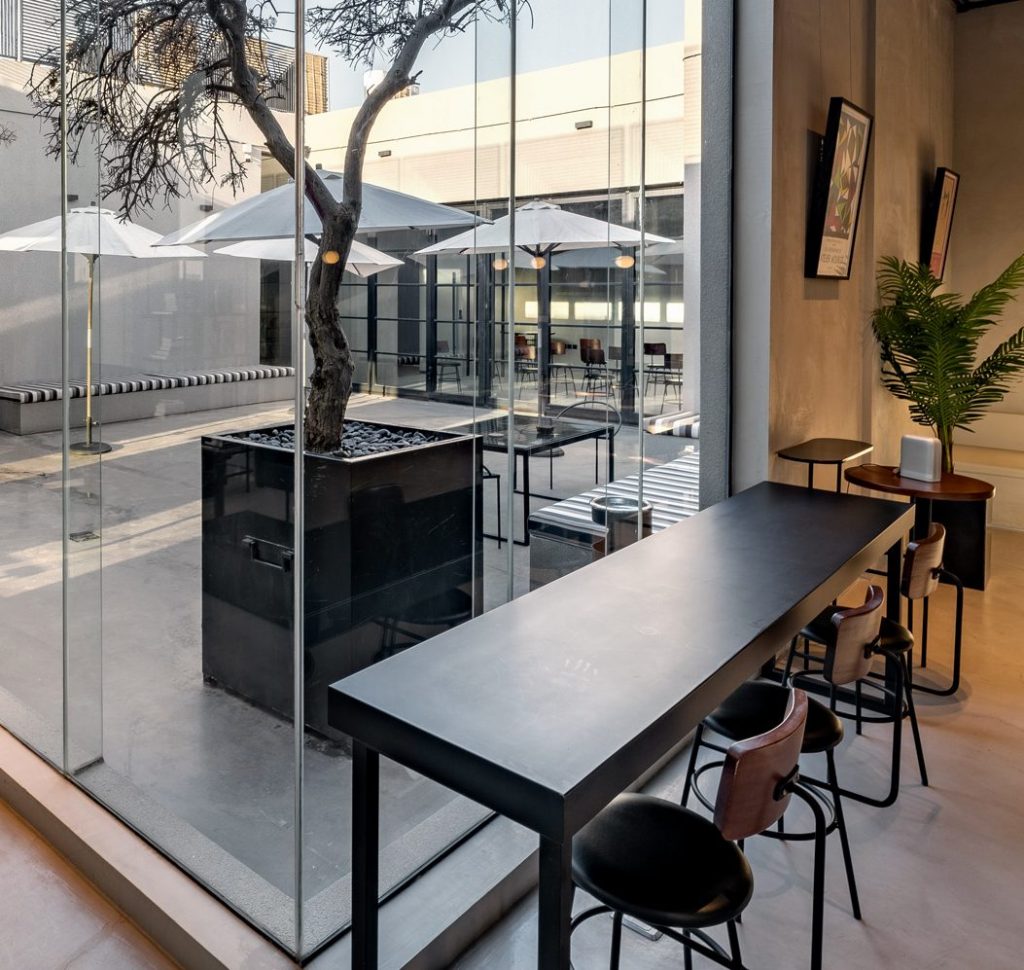
Spontaneous interaction is valuable when it is high-quality: the right people crossing paths at the right time with the ability to quickly resolve issues, share context, or spark ideas.
A workplace that is designed for connection increases the frequency of these useful collisions without creating constant distraction. This is where layout, shared spaces, and programming matter.
What “earning the commute” looks like in practice
The phrase becomes real when the office behaves like a well-run system, not a place people endure. High-growth companies focus on a few operational standards that consistently improve the experience.
Hospitality-level service
Hospitality in the workplace means:
- The space is ready when people arrive
- Support is available when something fails
- The environment feels intentional, not improvised
It is not luxury. It is reliability.
Frictionless booking and predictable access
If people cannot easily book what they need, the office becomes inefficient. Frictionless systems allow:
- Quick room booking
- Clear visibility into availability
- Simple guest handling for stakeholder sessions
Predictability increases usage. Chaos decreases it.
Insight: Location Strategy Is Now a Competitive Advantage
Post-pandemic data shows that office attendance patterns vary significantly by city, sector, and commute friction. High-growth companies that treat location as a strategic variable outperform those copying global policies. In cities where commute times are long or hybrid culture is strong, smaller, central, experience-led spaces outperform traditional headquarters. In markets with stronger in-office norms, consistent presence may still create cultural leverage. The insight is simple: office strategy must be location-specific. A space that works in Tokyo may fail in London or San Francisco. Smart leadership teams benchmark locally before they sign.
Reliable technology that supports modern work
Nothing destroys the value of an in-person day faster than unreliable conferencing or awkward hybrid meetings. Reliability includes:
- Stable audio and video
- Rooms designed for hybrid participation, not retrofitted as an afterthought
- Private areas for sensitive calls and focused work
Comfortable spaces designed for different modes of work
To earn the commute, the office must support both:
- Focus work when needed
- Collaboration work when it matters
That requires variety: quiet zones, phone booths, meeting rooms, workshop spaces, and comfortable shared areas, all with good acoustics and thoughtful flow.
Programming that makes attendance meaningful
Even the best physical space will underperform if it is not operated with intention. Programming creates the moments that matter:
- Team collaboration blocks
- Learning sessions and workshops
- Onboarding touchpoints
- Community or culture rituals that strengthen connection
When programming is strong, office days feel valuable. When programming is absent, office days feel like a habit.
Riyadh lens: what high-growth teams should prioritize when choosing office rental in Riyadh
Choosing office rental in Riyadh is not just a real estate decision. For fast-growing companies, it is a talent decision, a productivity decision, and an operations decision. Riyadh is a city where centrality, visitor experience, and day-to-day reliability can strongly influence whether the workplace supports growth or becomes another layer of complexity.
The global framework still applies, but it needs to be translated into local decision factors that matter in practice.
Centrality and convenience for teams and visitors
Centrality is not only about prestige. It is about reducing friction in the employee journey and improving the experience of customers, partners, and candidates.
High-growth teams should evaluate:
- How easy it is for employees to reach the space consistently
- Whether the surrounding area supports productive workdays (restaurants, cafes, services)
- How visitors experience arrival, navigation, and meeting flow
- Whether travel time and access create a “silent policy” that reduces attendance
When the office is inconvenient, even strong programming struggles. When it is convenient, the office has a fair chance to earn routine presence.
Meeting and event capability as a default, not an add-on
Fast-growing companies run on interaction:
- Weekly leadership rhythms
- Cross-functional planning sessions
- Onboarding and training blocks
- Stakeholder meetings and workshops
In many office search processes, meeting rooms are treated as a checklist item. High-growth teams treat them as core infrastructure.
In practice, the question is not “Do you have meeting rooms?” The question is:
- Do the rooms reliably support the way we work, including hybrid calls and workshops?
- Can we run multiple meetings without constant scheduling conflict?
- Can we host important moments, not just routine calls?
When meeting and event capability is built into the default offering, the workplace becomes easier to operate. When it is limited or difficult to access, leadership ends up spending time solving logistics instead of scaling the business.
Quality amenities that support long, productive days
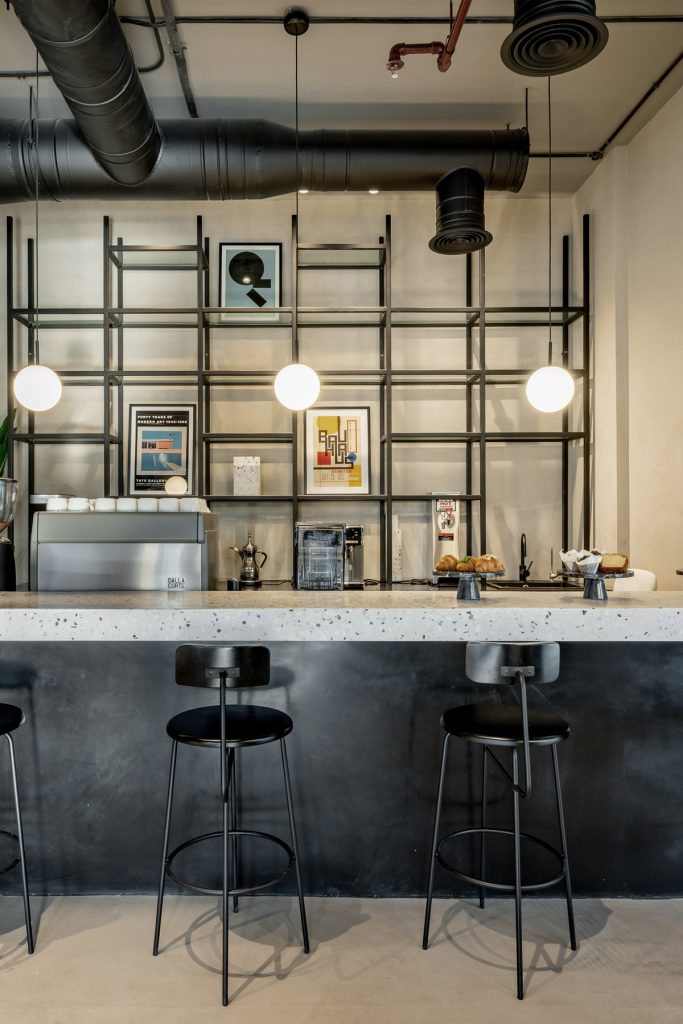
Amenities are often dismissed as “nice to have,” but the best ones directly support performance. In a high-growth environment, people need the workplace to sustain energy and focus across long days that include meetings, deep work, calls, and collaboration.
High-value amenities typically include:
- Quiet spaces for focus and private conversations
- Comfortable shared areas for informal problem solving
- Reliable food and beverage options that reduce daily friction
- Clean, well-managed facilities that feel consistent and professional
- Outdoor or restorative spaces that help people reset during the day
The goal is not luxury. The goal is a workplace that makes it easier to have a high-output day without feeling drained.
Flexibility for scaling headcount and changing schedules
Growth creates variability. Attendance patterns shift with product cycles, hiring surges, stakeholder visits, and team rhythms.
Flexible office solutions are especially valuable when:
- Headcount is growing, but forecasts are uncertain
- Teams need a mix of private space and shared desk capacity
- Collaboration peaks require more rooms and project spaces temporarily
- The company wants optionality without locking into long fit-out timelines
In Riyadh, where business networks and in-person presence can be strategically important, flexibility allows a company to maintain a strong central workspace while still adapting to growth without overcommitting.
What to evaluate during tours: the questions that reveal operational quality
Tours often focus on aesthetics. High-growth teams focus on operations. The difference is important, because workplace performance is primarily a product of how the space runs day to day.
When evaluating options, pay attention to:
Operations and service model
- Is there visible front-of-house support and clear standards for space readiness?
- How are issues handled when something breaks or a room needs support?
- Does the environment feel consistently maintained, not just staged for tours?
Tech readiness and reliability
- Is conferencing infrastructure reliable and built-in, not improvised?
- Are there strong options for hybrid meetings and workshops?
- Is Wi-Fi stability treated as essential, with professional support?
Member and tenant experience
- Is onboarding smooth and structured?
- Are policies clear enough to prevent friction, but flexible enough to support real work?
- Does the environment feel designed for productivity, not only for visuals?
Privacy options and work-mode variety
- Are there phone booths or private areas for sensitive calls?
- Are there quiet zones that actually feel quiet?
- Is there a clear separation between collaboration energy and focus work?
Booking system reliability
- How easy is it to book rooms and see availability?
- Are there limits or allowances that match your usage needs?
- Does booking feel like a frictionless tool or a constant negotiation?
If you leave a tour with clarity on these points, you are evaluating the workplace as an operating system, not as a floorplan.
If you are exploring office rental in Riyadh, consider scheduling a tour at R House and evaluating it against this scorecard. Look for what matters most to a scaling team: focus-first space options, flexible capacity, reliable meeting and project environments, and a community layer that helps your people connect, collaborate, and grow.
Reimagine Your Office Strategy in Riyadh
From digitally enabled meeting rooms to thoughtfully designed collaboration zones, R House offers a modern approach to office rental in Riyadh. Evaluate the space against your performance scorecard and see how it supports focus, connection and growth.
Contact R House TodayFAQ – How Fast-Growing Companies Think About Their Office Space
Why do fast-growing companies rethink their office strategy more often?
Fast-growing companies face constant changes in headcount, team structure, and coordination complexity. As they scale, misalignment and friction become more expensive. Revisiting office strategy allows leadership to ensure the workplace supports onboarding, collaboration, and decision-making speed rather than slowing growth with outdated layouts or rigid lease commitments.
Is the office still necessary in a hybrid work model?
Yes, but its role has changed. The office is no longer the default place for individual work. Instead, it is most valuable for high-impact moments such as alignment sessions, onboarding, learning, trust-building, stakeholder meetings, and complex collaboration. The office must earn attendance by improving outcomes, not by enforcing presence.
How can leaders decide how much office space they actually need?
Leaders should base space decisions on realistic attendance patterns and work modes, not total headcount. By analyzing peak usage days, collaboration needs, meeting room demand, and focus requirements, companies can size their footprint more accurately and redirect budget toward quality, flexibility, and performance rather than unused desks.
When does a traditional office lease make sense for a scaling company?
A traditional lease is often appropriate when headcount growth is stable, attendance is predictable, and the company has specialized requirements such as security, custom layouts, or equipment. In these cases, long-term control and tailored design can support operational consistency and brand positioning.
Why are flexible office solutions attractive for high-growth teams?
Flexible solutions reduce real estate risk during rapid growth or uncertain headcount projections. They allow companies to scale capacity up or down, access diverse space types such as project rooms and meeting areas, and avoid overcommitting to long leases while still maintaining a professional presence.
What does it mean for an office to be digitally enhanced?
A digitally enhanced office integrates hardware, software, and operational systems to reduce friction and improve productivity. This includes reliable conferencing technology, intelligent room booking platforms, space utilization insights, and infrastructure that adapts to evolving workflows. The goal is to make office time more efficient and predictable than the alternative.
How does sustainability influence office decisions today?
Sustainability now impacts risk management, brand credibility, and talent retention. Companies evaluate energy efficiency, operational decarbonization pathways, and well-being features such as natural light and air quality. A sustainable office can help meet reporting obligations while also improving employee performance and satisfaction.
How can a company evaluate office rental in Riyadh using a performance-based approach?
When considering office rental in Riyadh, leadership teams should assess centrality, meeting and event capability, flexibility for growth, digital readiness, and overall operational quality. The key question is whether the space will accelerate onboarding, improve coordination, and strengthen culture. If the office consistently delivers better outcomes than working remotely, it is fulfilling its strategic role.