How Office Location in Riyadh Impacts Hiring, Clients, and Business Growth
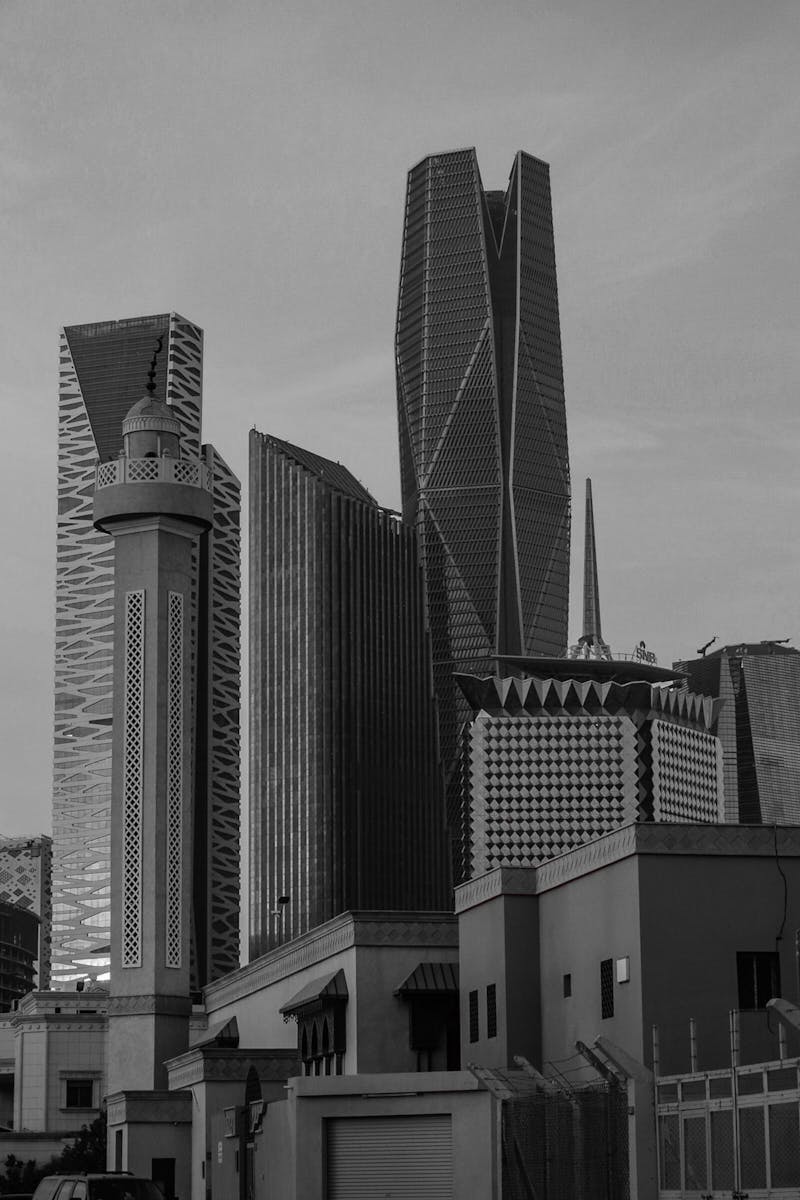
In Riyadh, office location is one of the earliest strategic choices that directly shapes how quickly you can hire, how confidently you can host clients, and how smoothly you can scale operations without losing momentum. When your address reduces friction for the right people, it quietly becomes a growth multiplier. When it creates friction, it shows up everywhere: slower recruiting cycles, lower meeting attendance, more rescheduling, and teams that burn energy on logistics instead of execution.
Hiring impact: how location changes who you can recruit and keep
Candidate perception: prestige, convenience, and daily experience
Candidates do not evaluate a workplace the way companies do. Businesses often think in terms of rent, square meters, and contract terms. Candidates think in terms of daily life. Their decision process is more personal and more continuous: “Can I see myself doing this three to five days a week without it draining me?”
Choose an Office Location That Accelerates Hiring
If you want to attract stronger candidates, improve offer acceptance rates, and reduce commute friction for your team, your location matters. Work from a centrally positioned coworking space in Riyadh designed to support focus, flexibility, and long-term growth.
Schedule a Tour at R HouseIn Riyadh, the strongest candidate signal is convenience combined with professionalism. A centrally positioned office or coworking environment tends to perform better in hiring because it reduces uncertainty. Candidates know what it means when a workplace is easy to reach, surrounded by city infrastructure, and set up for serious work. It communicates that the company respects time, understands modern expectations, and is building something stable enough to invest in.
What candidates typically assess, often within minutes of hearing your location, includes:
- Commute time and predictability
Not just the minutes, but the reliability. A location that consistently requires long or unpredictable travel becomes a reason to hesitate, even when the role is attractive. - The surrounding area and amenities
Proximity to cafés, restaurants, hotels, bookstores, and retail is not about luxury. It is about the practical reality of meetings, breaks, and the ability to run a workday smoothly. - The professional feel of the workspace
Candidates notice reception flow, cleanliness, lighting, noise levels, and whether the space feels designed for focus and collaboration rather than improvised. - The social and cultural energy of the environment
A location associated with innovators and entrepreneurs can make a company feel more connected and forward-looking, which matters to top performers who want growth and learning.
This is where employer branding becomes tangible. Employer branding is not only your website or job description. It is the lived experience around the job. A strong location improves offer-to-acceptance rates because it reduces practical objections and increases emotional confidence. In other words, a good role feels even better when the day-to-day logistics are clearly workable.
Insight: Commute Time Is a Retention Multiplier
Employee retention is often discussed in terms of salary, culture, and leadership, yet commute time quietly shapes long-term satisfaction. When a workplace is centrally located and easy to access, employees conserve energy and arrive more focused. This consistency improves collaboration, punctuality, and overall engagement. Over months and years, the reduced stress associated with a manageable commute can have a measurable impact on retention and productivity. In a competitive hiring market like Riyadh, location becomes more than convenience; it becomes part of the employee value proposition.
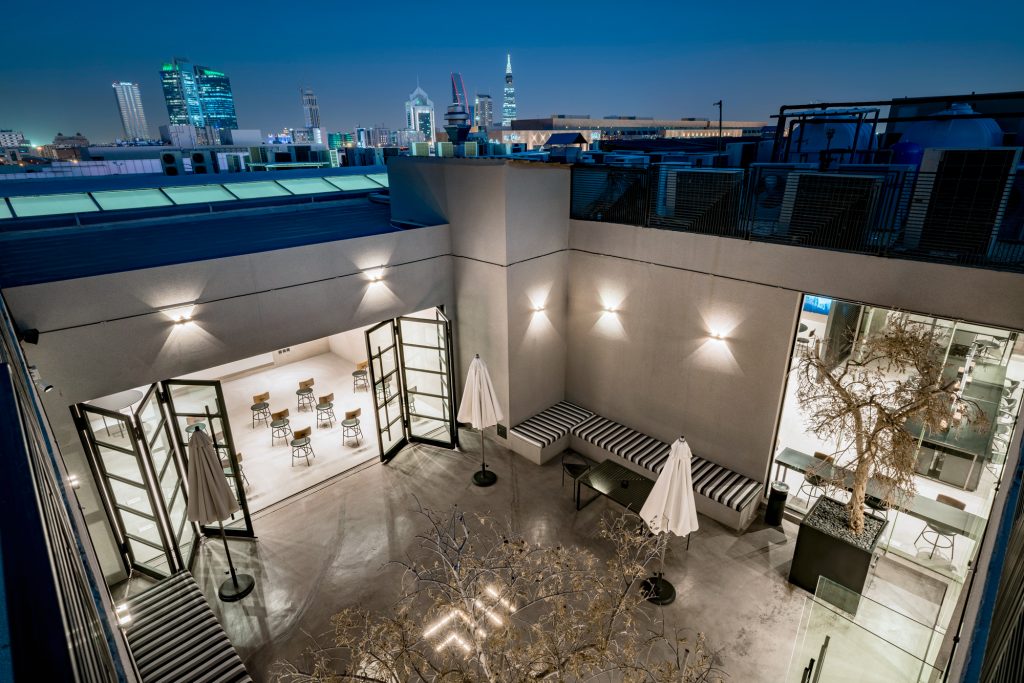
Retention and productivity: commute stress, flexibility, and workspace design
Hiring is only half the equation. The bigger, more expensive problem is retention. Location is one of the most underestimated drivers of why people stay or quietly disengage. The reason is simple: commuting stress accumulates. It does not show up as one dramatic complaint; it shows up as daily fatigue, late arrivals, more sick days, lower patience, and a gradual decline in energy.
Shorter commutes and easier access reduce burnout because they protect the most limited resource your team has: attention. When people arrive less depleted, they contribute more consistently. When commuting is painful, productivity becomes uneven. This matters even more in hybrid models. Hybrid does not eliminate the impact of location; it concentrates it. On in-office days, people expect a workspace that justifies the effort of coming in.
A location supports retention when it also enables flexibility. Flexibility is not only about remote work. It includes the ability to access the workspace in a way that matches how modern work actually happens. Some roles require early starts, late client calls, or quiet focus time outside standard hours. When a workspace can support different work patterns without friction, it becomes part of the employee experience, not just a background detail.
Workspace design matters here as much as the address. Even in the best district, a poorly designed office creates fatigue through noise, lack of privacy, and constant interruptions. The most effective spaces support both modes of work:
- Focus work that requires quiet, minimal distraction, and comfort
- Collaborative work that benefits from shared areas, meeting rooms, and the ability to brainstorm without disrupting others
A professional environment designed intentionally for productivity is not a “nice to have.” It is infrastructure. It protects deep work, supports team coordination, and makes hybrid days worthwhile. The outcome is a team that performs with more consistency and stays longer because the workday feels sustainable.
Team growth without relocation pain
Growth often breaks teams not because the business is failing, but because the setup cannot keep up. One of the most common operational setbacks is relocation stress: the moment you outgrow a space, you lose time and attention to searching, moving, renegotiating, and rebuilding daily routines. During that period, hiring slows down, collaboration gets messy, and the company feels less stable than it actually is.
A centrally positioned workspace reduces this friction in two ways. First, it keeps your recruiting reach wider as you scale. When you hire across different parts of the city, a central location becomes a shared “middle ground” that feels fair and realistic for a larger team. Second, centrality improves team coordination as headcount increases. Meetings are easier to schedule, attendance is more reliable, and client visits can happen without turning into a half-day event.
To understand the operational benefit, think of growth stages and what location needs to support at each stage:
- Solo to small team
You need a professional base that makes you credible and helps you meet clients confidently without committing to an oversized lease. - Small team to multi-function team
You need meeting capacity, privacy options, and predictable access so the team can coordinate without crowding or distraction. - Multi-function team to scaling organization
You need systems that reduce administrative burden: easy booking, reliable tech, and a location that keeps the team’s logistics manageable as schedules get more complex.
Client impact: location as proof of credibility and operational maturity
First impressions: address, reception, and meeting experience
Clients rarely evaluate your company purely on the quality of what you deliver. They also evaluate the risk of working with you. In Riyadh’s fast-moving business environment, the biggest unspoken question in a first meeting is often: “Is this team reliable and established enough to execute consistently?” Your office location can answer that question before you say a word.
An address that is easy to reach in central Riyadh communicates operational maturity. It tells clients you understand how business is done in the city, that you value their time, and that you are positioned where serious work happens. For B2B services, consultancies, agencies, and startups raising capital, the signal matters because trust is the product you are selling alongside your service. Investors, corporate partners, and procurement teams do not only buy capability. They buy confidence.
Host Clients in a Space That Builds Trust
Your address, reception experience, and meeting environment shape how clients perceive your business. Discover a professional office space in Riyadh for businesses that combines central access, modern meeting rooms, and reliable technology to help you close deals faster.
Explore Membership Options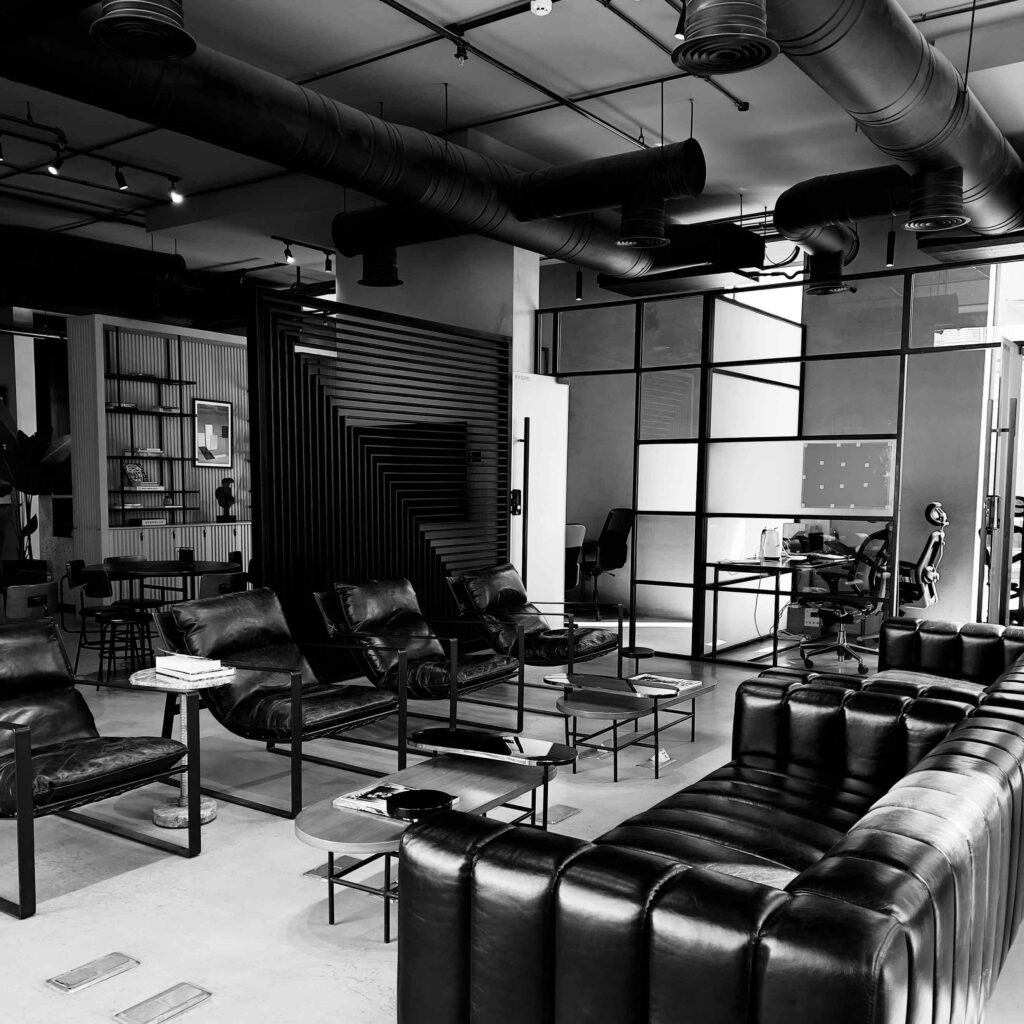
The experience begins the moment someone arrives. A professional front-of-house reception does more than greet. It removes friction and uncertainty. When a client walks into a workspace that feels organised, intentional, and well-run, they infer that your processes are likely the same. They notice the details:
- Whether arrival is smooth or confusing
- Whether the environment feels calm and professional or improvised and noisy
- Whether there is a clear place to wait, meet, and transition into the conversation
- Whether your team looks settled in the space or temporarily “passing through”
This is why office space in Riyadh for businesses is not just a workspace decision. It is a credibility system. The right location and reception experience reduce perceived risk, which shortens decision cycles and makes it easier for clients to commit, especially when they are comparing you against competitors with similar capabilities.
Insight: Location Reduces Sales Cycle Friction
Many companies focus on pitch decks, pricing strategy, and negotiation tactics to close deals faster, but overlook the hidden role of location. A centrally positioned office space in Riyadh for businesses often shortens the sales cycle because meetings are easier to schedule, decision-makers are more willing to attend in person, and follow-up sessions happen without logistical resistance. Over time, this compounds into faster approvals, fewer stalled projects, and stronger renewal rates. In practical terms, location acts as a silent accelerator for deal momentum by reducing the small but cumulative barriers that delay decisions.
Winning deals faster: being close to where clients already are
Most deals do not fail because the offer is wrong. They fail because momentum is lost. Meetings get pushed. Key stakeholders cannot attend. The project stalls in “we’ll come back to this” mode. Location plays an outsized role in keeping momentum alive because proximity affects how easy it is for clients to show up consistently.
Centrality matters in Riyadh because business schedules are dense and travel time is an invisible drain. A central location reduces the friction of decision-making in three ways. First, it improves scheduling. When the meeting location feels convenient, the calendar fills faster. Second, it reduces cancellations. The easier the meeting is to attend, the less likely it is to be postponed. Third, it increases attendance for recurring meetings, which is where most long-term revenue is built.
This effect is strongest for companies that depend on repeated client interactions: agencies running monthly performance reviews, consultancies leading workshops, product teams doing stakeholder alignment, and startups nurturing partnerships. When you are located where clients already spend time, you stop forcing them to make an extra effort. The meeting becomes part of their normal workflow, not an exception they need to justify.
Over time, this creates a measurable business advantage. Fewer delays mean faster approvals, earlier project starts, and smoother renewals. You are not only saving travel time. You are protecting deal momentum, which is often the difference between a signed contract and a “let’s revisit later.”
Hosting clients well: meeting rooms, tech, and privacy
Client-ready is not a vague standard. It is a practical set of requirements that determine whether your meetings feel professional, productive, and secure. In Riyadh, where many companies work with regional and international stakeholders, the ability to host both in-person and hybrid meetings is no longer optional. It is part of basic operational credibility.
A client-ready workspace supports the full meeting lifecycle: preparation, delivery, and follow-up. That means reliable video conferencing that works immediately, not after ten minutes of troubleshooting. It means sound privacy so confidential discussions do not become public conversations. It means a setup that feels intentional: clean tables, comfortable seating, adequate lighting, and a professional environment that reinforces the seriousness of the discussion.
Space sizing matters as well. Businesses rarely stay at one meeting size. One week you need a room for six people. The next week you need to host a workshop for 15 to 20. Client-ready office space in Riyadh for businesses should accommodate these realities through a range of meeting spaces and the ability to book them predictably.
A professional meeting environment changes how clients behave. They focus. They take the conversation seriously. They are more likely to bring senior stakeholders. They treat the meeting as a business commitment rather than an informal catch-up. That is not only about comfort. It is about outcomes: clearer decisions, faster alignment, and stronger relationships.
Business growth impact: speed, network effects, and the “right room at the right time”
Growth is social: proximity to partners, collaborators, and opportunity
Growth is often portrayed as a product of strategy and execution. In practice, growth is also social. Opportunities appear through proximity: who you meet, what conversations you overhear, and how quickly you can turn a connection into a collaboration. In a city like Riyadh, where sectors are expanding and ecosystems are forming rapidly, location can either plug you into that flow or isolate you from it.
A location that attracts innovators, creators, entrepreneurs, and decision-makers becomes a multiplier because it increases the probability of high-quality interactions. The strongest networks are not built by “networking harder.” They are built by being in the right place consistently, in an environment where people are building, hiring, partnering, and investing.
This kind of proximity produces practical growth effects:
- Referrals become more likely because people understand what you do and see you operating consistently
- Partnerships form faster because meeting is easy and follow-up is immediate
- Collaboration becomes normal because you share context, not just contact details
- Hiring improves because talented people are already present in the environment
In other words, the right location does not just make you look credible. It makes you more connected. And connection is a growth asset.
Flexibility beats fixed overhead: scale space up or down
A major barrier to growth is not lack of demand. It is fixed overhead that does not match reality. Many companies experience uneven growth: headcount rises after a funding round, then stabilises; a project team expands for six months, then contracts; a regional office starts lean, then grows once revenue is predictable. Traditional long leases punish this reality. They lock you into costs, layouts, and commitments that may not fit your next quarter.
That is why modern companies increasingly prefer flexible office options and membership models. Flexibility is not about being casual. It is about being operationally intelligent. When your workspace can scale with you, you protect capital and reduce risk. You can move from a shared setup to a private office, add meeting room capacity when client work increases, and adjust your footprint without turning the move itself into a major project.
This is where the concept of office space in Riyadh for businesses becomes strategic. The best workspace model is the one that supports growth without forcing you into premature commitments. Flexibility allows you to invest in talent, marketing, and delivery instead of tying resources to space you may not fully use.
Events as a growth engine
Many companies treat events as optional or cosmetic. In reality, well-curated seminars, workshops, and business gatherings are a direct growth mechanism when they are connected to the right community and the right location. Events create structured proximity. They bring the right people into the same room for a reason, which produces higher-quality conversations than random introductions.
Thought-provoking events serve three growth functions. First, they generate leads by placing you in front of people who already care about the problems you solve. Second, they build credibility because participation signals that you are part of the ecosystem, not operating on the margins. Third, they accelerate partnerships because shared experiences create trust faster than cold outreach.
In Riyadh, where relationships and reputation strongly influence business outcomes, events should be viewed as part of your growth infrastructure. When your workspace environment consistently hosts meaningful gatherings, you benefit even when you are not “selling.” You are building visibility, trust, and context, which makes future sales conversations easier and faster.
Scale Your Business Without Relocation Disruption
Growth should not force you into costly long-term leases or constant office moves. Choose flexible coworking memberships in central Riyadh that adapt to your team size, support workshops and meetings, and connect you to a community of innovators.
Start Your Membership Journey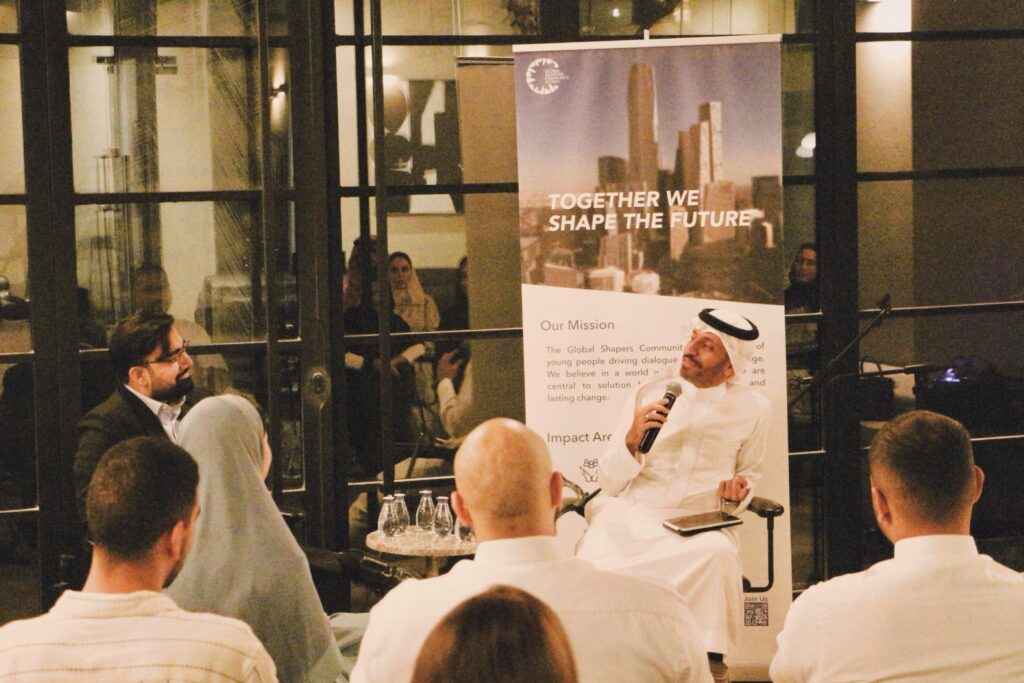
What to look for when choosing office space in Riyadh for businesses
Choosing the right office location in Riyadh is less about picking the most impressive neighbourhood and more about aligning the workspace with the outcomes your business needs. The correct decision framework starts with centrality, not as a status symbol but as a productivity tool. Central locations reduce commuting friction for your team and reduce scheduling friction for your clients. If you are frequently meeting partners, running reviews, hosting interviews, or bringing stakeholders together, centrality becomes a measurable advantage, not a preference.
FAQs – How Office Location in Riyadh Impacts Hiring, Clients, and Business Growth
How does office location in Riyadh affect hiring success?
Office location directly influences commute convenience, candidate perception, and employer branding. A centrally positioned office space in Riyadh for businesses expands your effective talent pool, improves interview attendance, and increases offer acceptance rates because candidates see the workplace as accessible and professionally established.
Does a central Riyadh address improve client trust?
Yes. Clients often interpret a central business address and professional reception experience as signals of operational stability and seriousness. This perception reduces risk concerns and strengthens confidence, particularly for B2B services, consultancies, agencies, and startups seeking investors.
Why does proximity to clients matter in Riyadh?
Being close to where clients already operate makes meetings easier to schedule, reduces cancellations, and improves attendance for recurring sessions. Centrality protects deal momentum and shortens sales cycles by minimizing travel friction and logistical barriers.
What makes a workspace “client-ready” in Riyadh?
A client-ready workspace includes professional meeting rooms, reliable video conferencing, sound privacy, and spaces sized appropriately for small meetings and larger workshops. These elements ensure productive discussions, clear communication, and a professional impression during both in-person and hybrid sessions.
Can coworking spaces support business growth long term?
Modern coworking environments offer scalable options that allow companies to move from flexible desks to private offices without changing location. This flexibility protects capital, avoids long-term lease risk, and enables businesses to adjust space requirements as headcount evolves.
How does location influence employee retention?
Commute stress and daily convenience strongly affect retention. Centrally located offices reduce travel time, lower fatigue, and improve consistency in attendance and productivity. Over time, this contributes to higher employee satisfaction and reduced turnover.
Does office location impact networking and partnerships?
Yes. Workspaces located in central business areas often attract entrepreneurs, investors, and decision-makers. This proximity increases the likelihood of referrals, collaborations, and strategic partnerships that accelerate growth.
What should businesses prioritize when choosing office space in Riyadh?
Businesses should prioritize centrality, reliable technology, meeting room availability, guest management policies, access hours, and the ability to use the address for official purposes. The best office space in Riyadh for businesses is one that simultaneously strengthens hiring, client meetings, and long-term growth outcomes.