Why the Office Still Matters in a Hybrid Work World
Hybrid work is no longer a temporary experiment or a perk reserved for a few roles. It is a practical, widely adopted way of working that blends remote days with time spent in a shared workplace. Hybrid work means you intentionally split your workweek between working from home (or another remote location) and working in an office or coworking space, based on what you need to accomplish.
Office days still matter because they unlock benefits that are difficult to replicate through screens: faster collaboration, stronger networks, better mentoring, a real sense of belonging, quicker decisions when work is ambiguous, healthier ergonomics, and culture you can actually feel.
Turn office time into your hybrid advantage
Work from a coworking space in Riyadh designed for collaboration, focus, and real team connection. R House gives hybrid teams the environment they need to create, decide, and grow together.
View the spaceHybrid changed the job of the office, not its value
For decades, the office functioned as the default location for everything: meetings, solo work, quick questions, onboarding, client calls, and social connection. Hybrid work changed that. It did not remove the office’s value, but it forced a more honest question: what is the office uniquely good at, and what should be done elsewhere?
Today, the office is most valuable when it is treated as a high-leverage environment, not a mandatory destination. The highest-value office hours are the ones that compress time, reduce friction, and create shared understanding quickly. In practice, that means office time is now best used for:
- Collaboration that benefits from real-time energy and shared attention
- Mentoring and informal learning, especially for early-career professionals
- Belonging and relationship-building that prevent loneliness and burnout
- Speed, when ambiguity requires fast feedback loops and quick decisions
- Client trust and credibility, where a professional setting strengthens relationships
Hybrid done poorly creates predictable problems. When teams do not plan office time intentionally, the result is often more meetings, not better collaboration. People may spend office days on video calls anyway, cross-team connections weaken, decisions take longer, and culture becomes fragmented because there are fewer shared moments that reinforce “how we work here.”
Hybrid done well combines purposeful office days with remote deep work. You bring people together when togetherness creates compounding value, and you protect quiet remote time for execution. If you want to explore approaches to this balance, see: Flexible Office Solutions. If you want to understand why space shapes behavior, attention, and performance, see: Psychology of Space.

The 7 benefits of office time that hybrid can’t fully replicate
Below are seven advantages of being together in the same space for part of the week. Each benefit includes what it is, what research and real-world insight suggests, and how to plan your next office day so the benefit happens by design rather than by accident.
| Office benefit | Why it matters in hybrid work | How to use office days effectively |
|---|---|---|
| Faster collaboration and better ideas | In-person collaboration creates a shared cognitive environment where ideas flow faster. Facial expressions, body language, and real-time reactions make brainstorming more generative than screen-based discussions. | Schedule a weekly in-person ideation block, use whiteboards or physical surfaces, and end sessions by selecting a small number of ideas to prototype during remote deep-work days. |
| Stronger networks and fewer silos | Hybrid work strengthens close team ties but often weakens cross-team connections. Office presence enables low-friction interactions that spread knowledge and spark innovation. | Design cross-functional office days, invite adjacent roles to short reviews, and encourage casual conversations through events, shared spaces, and informal gatherings. |
| Mentoring and early-career development | Informal learning happens by observation. Being in the room exposes junior staff to decision-making, negotiation, and real problem-solving that is difficult to capture remotely. | Set mentoring office hours, encourage meeting shadowing, run walkthrough sessions, and end the day with short feedback conversations and clear next steps. |
| Wellbeing and belonging | Remote flexibility can mask loneliness. Office days create repeated, small social moments that build trust, emotional safety, and a genuine sense of belonging over time. | Plan one non-work touchpoint such as a coffee break or shared lunch, keep rituals consistent, leave space between meetings, and integrate new joiners intentionally. |
| Productivity for ambiguous, fast-moving work | When work is unclear or rapidly changing, in-person interaction shortens feedback loops and speeds up alignment, preventing delays caused by asynchronous communication. | Use office time for alignment and decisions, define ownership clearly, document outcomes immediately, and reserve remote days for focused execution. |
| Better ergonomics and safer workstations | Many home setups are improvised and can lead to physical strain. Offices typically provide adjustable furniture, better lighting, and healthier long-term working conditions. | Adjust your workstation on arrival, request ergonomic improvements when needed, schedule longer focus blocks in the office, and balance work with regular movement. |
| Culture you can feel | Culture is learned through behavior, not documents. Office days make values visible through real interactions, shared rituals, and everyday decision-making. | Welcome new hires in person, run short demos and retrospectives, reinforce shared norms, and celebrate wins visibly to strengthen collective identity. |
Give your hybrid team a place that works
From private studios to shared desks and meeting rooms, R House provides flexible office space in Riyadh built for how modern teams actually work.
Explore R HouseR House example: a coworking space in Riyadh built for modern hybrid work
R House is a strong illustration of what “office space in Riyadh” looks like when it is designed for modern hybrid work rather than traditional routines. Instead of treating the office as a place where everyone must sit at the same desk every day, R House is built around outcomes: focused work when you need it, collaboration when it creates speed, and community when relationships make work better.
What R House is and who it’s for
R House positions itself as a dynamic, progressive workspace designed for people who build, create, and lead. It is built for:
- Innovators who need an environment that supports experimentation and fast iteration
- Creators who benefit from flexible spaces and a community that understands creative work
- Leaders who need professional settings for meetings, decisions, and client trust
- Entrepreneurs who want a reliable base that can scale with changing needs
The overarching positioning is clear: it is a place designed to evolve, collaborate, and excel, which aligns with the core requirements of hybrid work. Hybrid teams do not need an office that simply provides desks; they need a workspace that supports different modes of work across the week.
R House’s central Riyadh location adds practical value to this concept. Being close to retail outlets, bookstores, hotels, restaurants, and cafes makes hybrid attendance easier and turns office days into productive, well-supported days rather than logistical challenges. The fact that the airport is under 30 minutes by car also matters for teams with visiting clients, partners, or colleagues traveling into the city.
Insight: Hybrid proximity effect
In hybrid teams, physical proximity has an outsized impact on outcomes compared to fully in-office teams. When people come in fewer days per week, every in-person interaction becomes more valuable. Teams that work from a centrally located office space in Riyadh experience faster decision cycles, stronger trust, and higher attendance on collaboration days because the friction of “getting there” is low. This creates a powerful flywheel: easier commutes lead to higher turnout, which leads to better collaboration, which reinforces the value of coming in.
The spaces that make office days productive
Hybrid office time works when the space matches the reason you came in. R House supports that by offering distinct environments that map to real hybrid workflows.
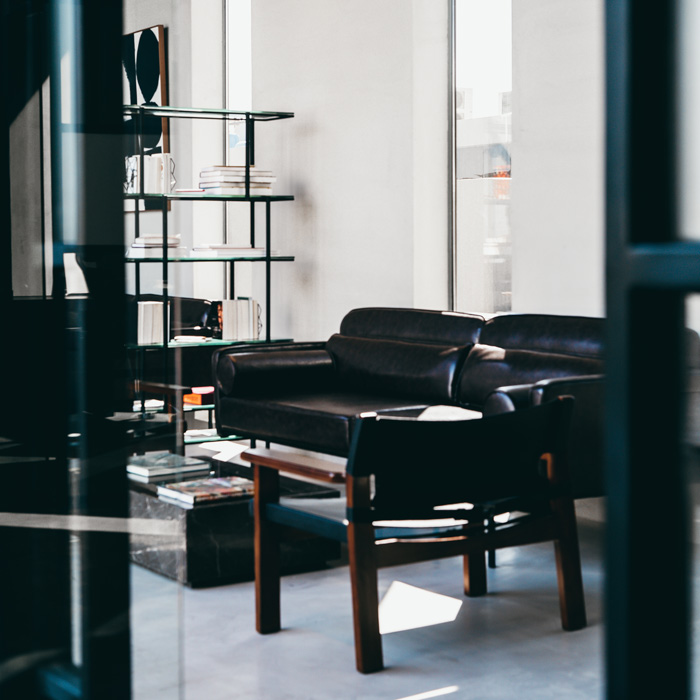
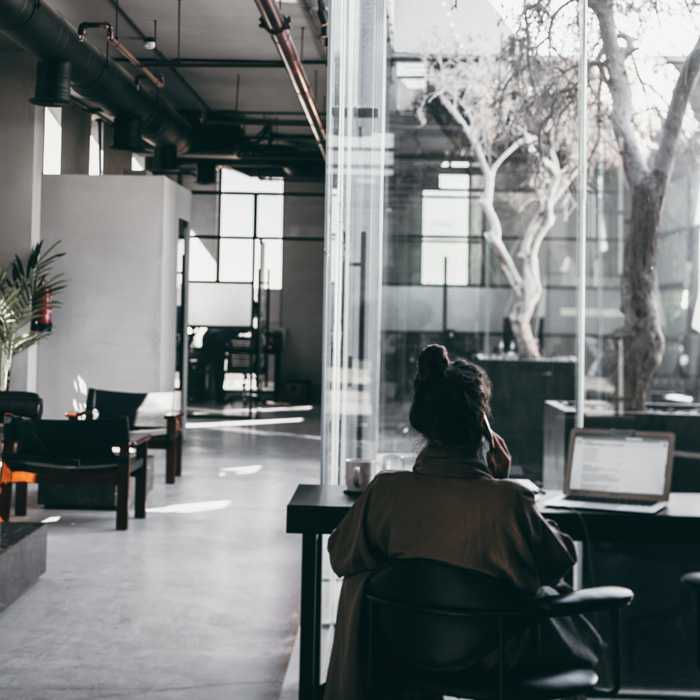
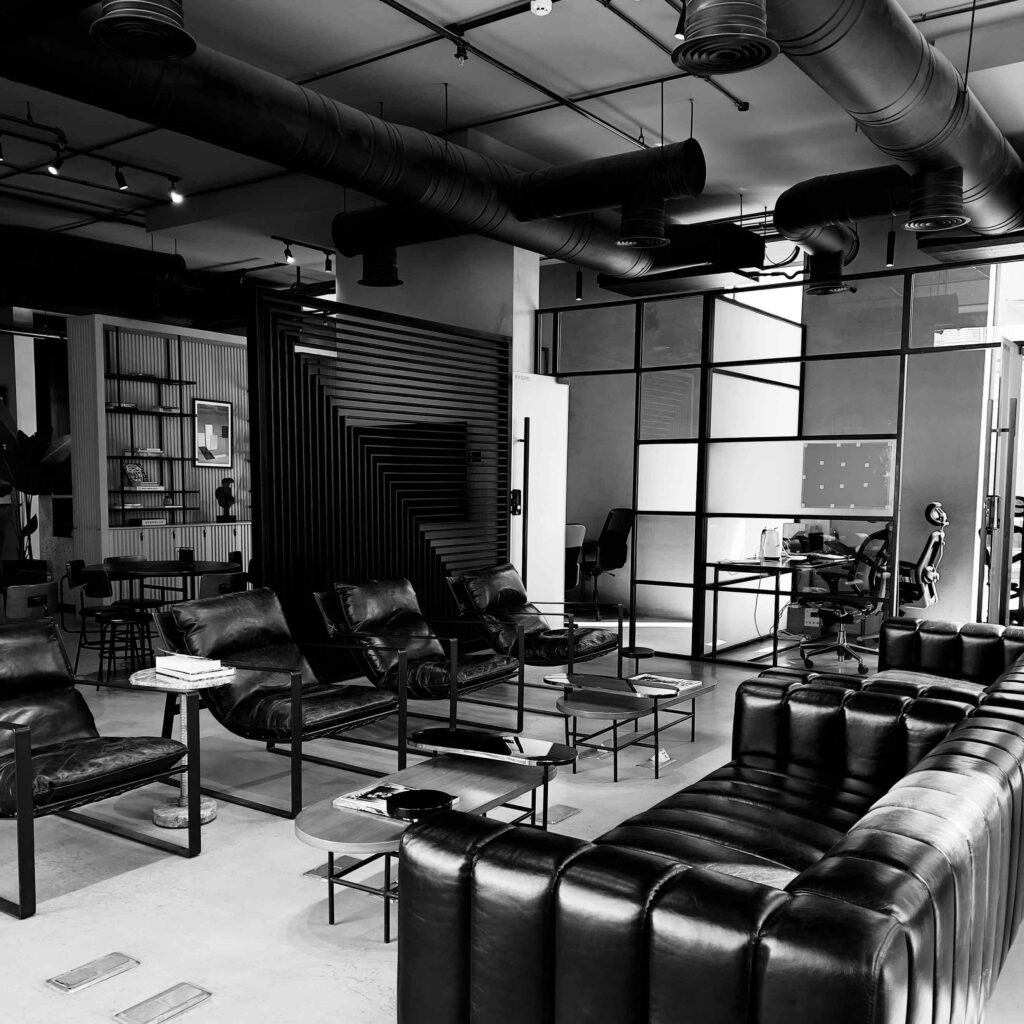
Shared desks and social spaces support day-to-day work and quick collaboration. They are useful when you want the energy of being around others, access to community, and the ability to switch from focus to conversation without overplanning.
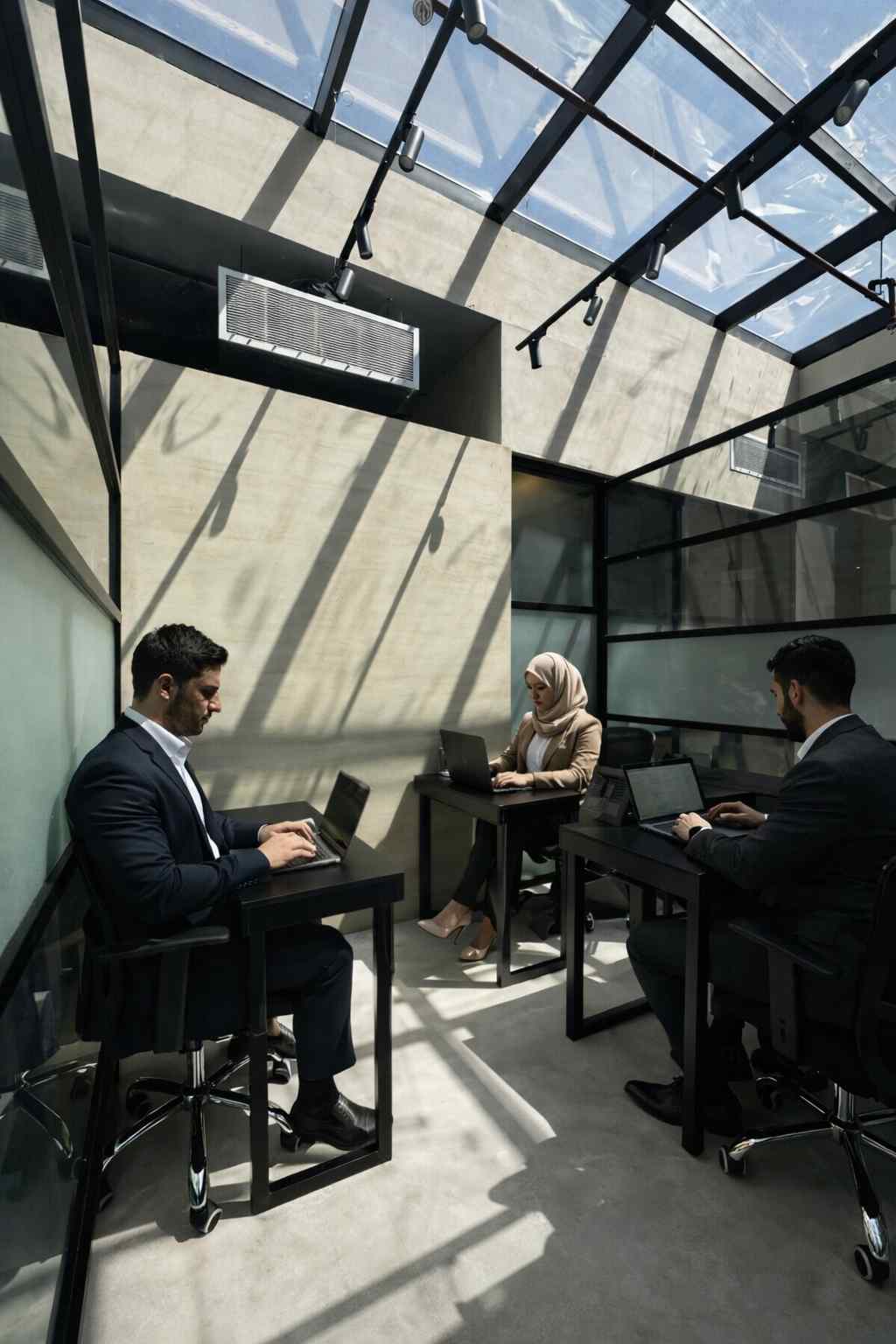
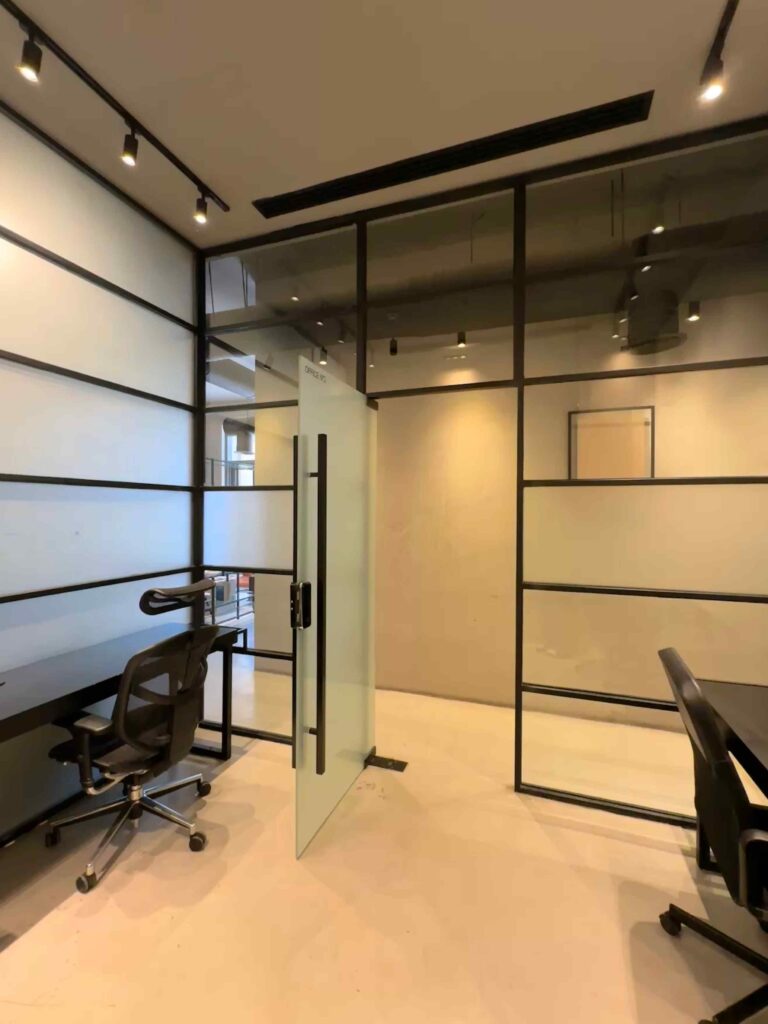
Private studios and offices serve individuals and teams who need privacy, continuity, and control of their environment. This is where deep work can happen in the office without constant interruption, and where teams can work together without compromising confidentiality.
R House also includes outdoor and semi-outdoor environments that give office days breathing room:
- Terrace for informal meetings, breaks, and lighter work
- Central courtyard for natural connection, quick resets, and a calmer rhythm between sessions
For structured collaboration, R House offers meeting rooms (6–20 people) with conferencing technology, reducing friction for hybrid meetings that include remote participants. The named spaces make it easier to choose the right environment for the job:
- The Boardroom for formal meetings (up to eight) with essential conferencing tech
- The Meeting Room for smaller day-to-day meetings (up to six)
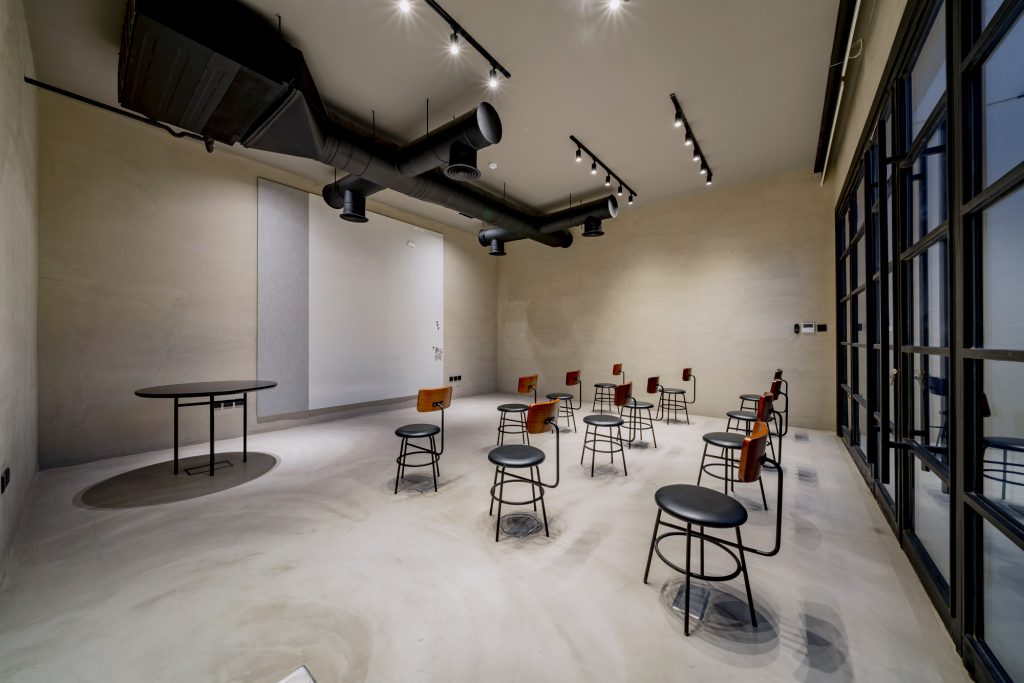
- The White Room as an open, art-style studio inspired by a “blank canvas,” suited for photoshoots, screenings, and creative sessions
- The Workshop Room for workshops and larger group meetings (up to 20)
A key hybrid-friendly concept is the art studio-style project space, which gives teams a bookable environment for focused, time-bound work that requires continuity across multiple sessions.
Amenities that support real work
R House’s amenities are designed to remove operational friction during office days. Instead of feeling like extras, they support the practical reality of hybrid schedules and varied work modes.
Key amenities include:
- Front-of-house reception
- Secure high-speed Wi-Fi and printing
- Member directory and app
- Member booking platform
- Meeting rooms with conferencing technology
- Private phone booths
- R House events
- Private shower rooms
- Artisan roasted coffee
- Parking
- Kitchen with healthy snacks and refreshments
These features matter because hybrid teams often need to arrive, work efficiently, host meetings, and leave without wasting time solving basic logistics.
Memberships aligned to hybrid needs
R House membership structure reflects two common hybrid patterns: people who need private space and people who need flexible access.
Resident membership fits individuals and teams requiring a private office or studio. It includes:
- 24/7 access
- Access to all spaces and events
- Ability to book studios, meeting rooms, and event spaces
- A monthly meeting room allowance as part of the package
Nomad Extended membership fits individuals who want flexible desk access without a fixed private space. It includes:
- Access during office hours (9AM to 8PM)
- Access to shared work and social spaces
- Ability to book rooms and attend events
Meeting room usage is structured by tier, which is important for planning office days:
- Resident members have included hours per month for bookable spaces, with extra hours available for purchase
- Collaborator members have a smaller included allocation, with extra hours available
- Nomad and transient members can purchase hours for bookable spaces via the platform
This structure helps hybrid teams match cost to actual use: included allocations support predictable needs, while add-on hours cover occasional workshops or client-heavy periods.
Practical policies that matter to teams
Operational clarity is one of the hidden features of a good hybrid workspace. R House includes policies that help teams plan without surprises:
- Guests are welcomed for informal meetings and catch-ups for a limited time during membership access hours, with sign-in requirements and rules that protect the environment
- Bookings and cancellations can be managed via the website or app with a clear cancellation window
- Mail and packages can be received using the space as a business address, with secure holding periods
- Storage is available for resident and collaborator members as part of their space
- Printing allocations are included by tier, with additional usage billed when exceeding the allocation
- Membership changes and cancellations follow notice periods that vary by membership type, supporting stability and planning
- A deposit is required upon joining to cover missed payments or incidentals, returned after cancellation within the defined timeframe
- An annual upfront payment option provides a discount, supporting teams that want predictable budgeting
Insight: The coworking multiplier
Hybrid teams working from coworking environments experience a network multiplier effect that traditional offices rarely provide. Because members share lounges, events, and meeting areas, they are exposed to founders, creatives, and operators outside their own company. Over time, this creates weak-tie networks that generate partnerships, hiring leads, and client introductions. In a market like Riyadh, where business still runs on relationships, coworking spaces such as R House quietly become growth engines, not just places to work.
How to choose the right office space in Riyadh for hybrid work
Choosing the right office space in Riyadh for hybrid work is less about finding the biggest space and more about finding the space that produces the outcomes you want from office time. The wrong office creates friction and encourages avoidance. The right office makes hybrid easier by design.
Location and commute realism
Hybrid attendance depends on how realistic it is for people to show up consistently. A central location near common routes and daily needs reduces the effort required to participate. If commuting feels unpredictable or overly time-consuming, teams start skipping office days, and the benefits of in-person time fade.
Meeting rooms and booking reliability
Hybrid office days often revolve around collaboration, workshops, and client sessions. Meeting rooms must be available when needed, easy to book, and suited to the group size. Reliability matters more than variety. A space that looks great but cannot deliver predictable booking creates wasted time and coordination overhead.
Privacy vs collaboration balance
A hybrid office must support both focus and teamwork. If everything is open-plan, calls and deep work suffer. If everything is closed, spontaneous collaboration disappears. The best spaces offer a mix: quiet areas, private rooms, and social zones that encourage connection without forcing it.
Tech, Wi-Fi consistency, video conferencing readiness
Hybrid work breaks quickly when tech is unstable. Look for consistently strong Wi-Fi, conference-ready rooms, and spaces designed to include remote participants without awkwardness. The goal is to make hybrid meetings feel intentional rather than improvised.
Community and networking
Hybrid can weaken cross-team and cross-discipline connections. A coworking environment that includes events, member introductions, or a directory supports weak ties that often lead to opportunities, faster problem-solving, and a stronger professional network over time.
Amenities that remove friction
Amenities are operational enablers. Parking reduces time loss. Kitchens and coffee areas support longer, more productive office days. Showers matter for people who want to train or commute actively. The more friction you remove, the more likely people will use the office strategically.
Flexibility of terms
Hybrid needs change. Teams grow, projects shift, and attendance patterns evolve. Look for spaces that allow upgrades and downgrades without major disruption, and that offer clear notice periods and predictable policies.
A short tour checklist can help you evaluate quickly:
- Does the location make consistent attendance realistic for your team?
- Can you book meeting rooms easily and reliably?
- Are there quiet areas for focus and private calls?
- Is the Wi-Fi consistently strong across the entire space?
- Are video calls in meeting rooms easy to run without tech friction?
- Does the space offer community value beyond desks?
- Are the terms flexible enough for your next 6–12 months?
Build stronger teams with the right workspace
R House connects hybrid work with real collaboration, community, and professional space in central Riyadh. Discover an office designed to support focus, culture, and growth.
Discover the spaceFAQ – Hybrid work and R House
Why does office time improve collaboration in hybrid teams?
Being together in the same space allows faster feedback, richer communication, and shared context. In-person sessions reduce delays, support brainstorming, and make it easier to align on priorities, which is especially important when work is complex or changing quickly.
How many days a week should a hybrid team be in the office?
Most hybrid teams find that one to two purposeful office days per week is effective. These days are best used for collaboration, mentoring, and client work, while the remaining days are reserved for focused remote execution.
What should we do on office days versus remote days?
Office days work best for ideation, alignment, training, and relationship-building. Remote days are better for deep work, writing, analysis, and production. This balance helps teams move quickly without sacrificing quality or focus.
What amenities matter most when choosing office space in Riyadh?
Reliable Wi-Fi, bookable meeting rooms, private call spaces, printing, parking, and good food and coffee options are essential. These amenities remove friction and make office days productive instead of inconvenient.
Can I schedule a tour before joining R House?
Yes. Prospective members can schedule a tour to see the spaces, learn about memberships, and understand how R House supports different hybrid work styles before making a decision.
Do you offer meeting rooms and how does booking work?
R House provides meeting rooms and project spaces for groups of six up to twenty people, all with conferencing technology. Members can book rooms through the website or app, with included hours depending on their membership tier and additional hours available for purchase.
What is the guest policy at R House?
Members may invite guests for informal meetings and collaboration during their access hours, subject to sign-in and time limits. Guests attending pre-booked meetings in meeting rooms or project spaces may stay for the full duration of the booking.
Can I receive mail and use R House as my business address?
Yes. Members can receive mail and packages at R House and use the address for their business. The front-of-house team notifies members when deliveries arrive and stores them securely for a set period.